Mujer Liminal: Nesting in the Dissonances of Trans Womanhood

By Fedra Cabrera Solano + Elizabeth Sánchez Sánchez
This month, Fedra Cabrera Solano and Elizabeth (Lizzie) Sánchez Sánchez discuss their evolving insights into womanhood as two Colombianas who recently began their transition, contrasting their lived experiences across rural and urban, as well as queer and straight, spaces in Colombia and the United States of America.
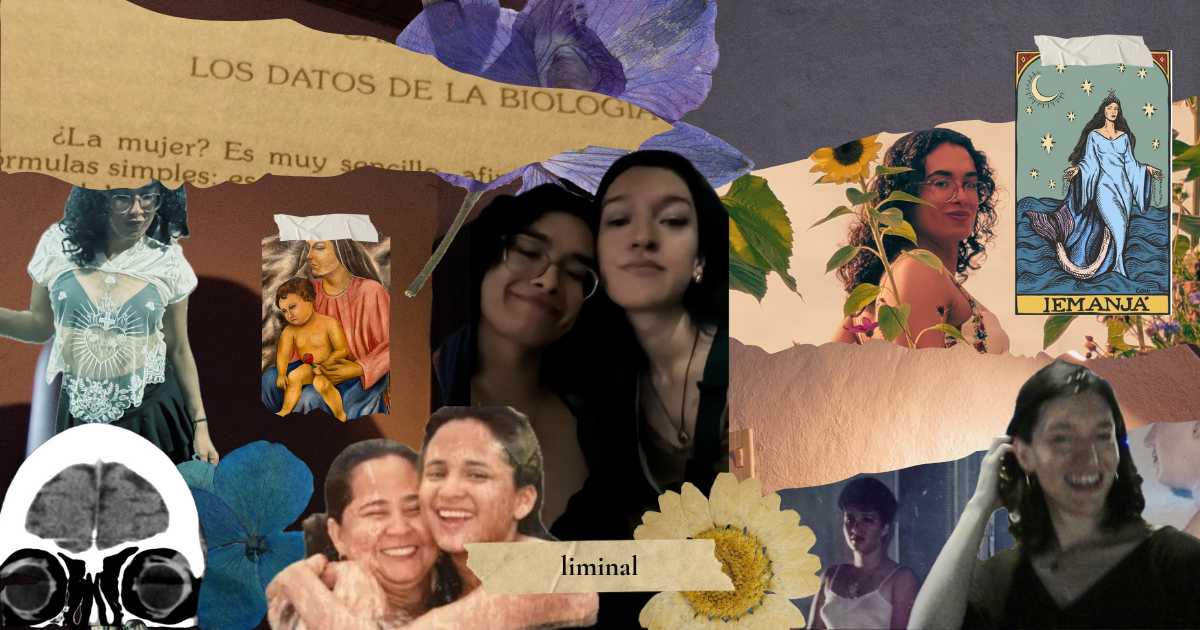
[Lizzie Sánchez Sánchez, “Hermanas liminales,” 2026]
“I am a reflection of my mother's secret poetry as well as of her hidden angers.” - Audre Lorde, Zami: A New Spelling of My Name
Fedra: When I started transitioning short of two years ago, I was asked by a friend, “What, to you, does it mean to be a woman?” Immediately, the question summoned images of my mother and grandmother back in Bogotá. Both were my role models growing up. I saw in them a tenacious resilience, a capacity for adaptation, and a fluidity almost like water. Like good daughters of the Colombian Caribbean, these women inspired in me an almost religious respect towards music and dance. They taught me how to dance cumbia, merengue, bachata with reverence and sacredness—as if they were passing down a code for expressing feminine beauty and playfulness, all while deploying the power of seduction.
Growing up, I wanted to embody all of these qualities. But I was reprimanded harshly—physically, emotionally, and socially—even by those same formative figures. As a man, I had to be restrained and stoic. The power I was supposed to express was more like the sturdiness of a rock and less like the gracious mutability of water. As I grew older, the drive to express these feminine qualities became too powerful. Beyond adopting and deploying a new identity—trans woman—my transition has been about allowing myself to learn and to embody these features of femininity shamelessly through my corporeality and behavior.
What has transitioning meant to you so far, amor?
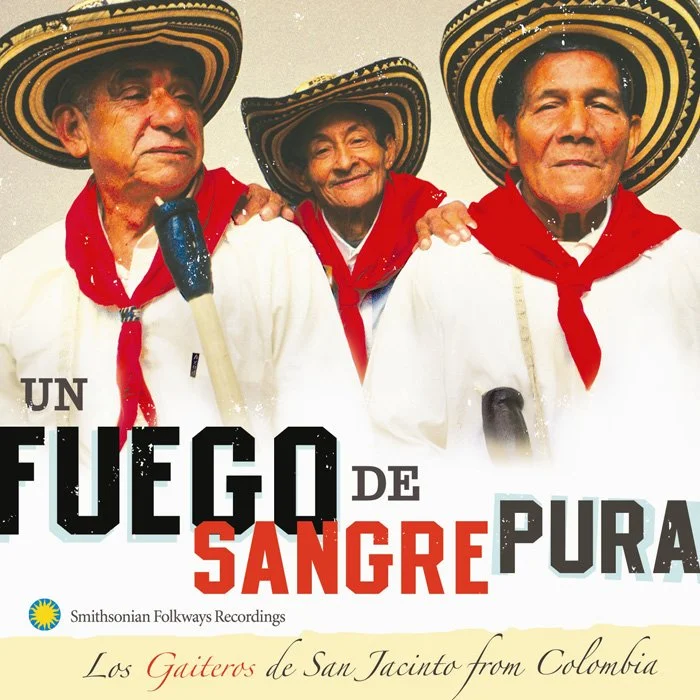
[Los Gaiteros de San Jacinto, Album Cover for Un fuego de sangre Pura, 2006]
Lizzie: For me, the process has been less about “becoming” a woman, and more about shifting my understanding of my place in relation to womanhood. For as long as I can remember, womanhood has inspired and shaped me. Like you, I also come from a lineage of strong, independent, and fiercely intuitive women. Mis madres—my grandmother, mother, and older sister; a Hecatean trinity of women—made me the woman I am now through a coven-like gathering of efforts. They taught me how to be both sensitive and decisive. They also taught me how to embrace my potential without crushing my tenderness in the pursuit of strength. Until late adolescence, I never felt the pressure to behave masculinely; they allowed a child to be just a child.
Fedra: It’s beautiful and rare that your madres didn’t pressure you. What changed in late adolescence?
Lizzie: In high school, I was confronted by aggressive masculinity. It was only then that I felt the need to define myself within gender. Back in rural Huila, boys were reckless, strong, and hard-working as their campesino fathers. [1] They dismissed school as a womanly endeavor. Only girls and maricones—sissies—cared for homework and learning. I chose to defy that behavior, not so much because I actually cared about gaining knowledge, but because it was somehow affirming for me to be seen as feminine by those around me—both men and other women—even if this perception came with shame and isolation. I guess that was the start for me, the oddly rewarding feeling of being called a girl, as an insult.
Fedra: So, this early moment of gender exploration before your transition was a moment of finding affirmation in that insult…making beauty out of the wound, so to speak. How much has this interplay between wounding and affirmation been a part of your transition?
Lizzie: It has been a part, yes. But I wouldn’t say that this wound defines me. Rather, it ignited an inner turmoil about gender that I had neither the language nor the tools to understand at the time. Being perceived as effeminate, even in that derogatory context, made evident a latent desire for womanhood I hadn’t recognized before. Manhood always felt foreign to me, almost as if I had spent years living outside my own body. As I grew older, I began finding the words to articulate the dissonance between my desires, my experience of my body, and how others perceived me. Yet I wouldn’t dare call myself a woman. How could I defy biology?
Ironically, my training in medicine taught me that the body was far more flexible than I had imagined. Through studying physiology, I learned how hormonal processes could reshape the body. I knew that my body could change, but I struggled to believe that I had the right to claim womanhood. It felt almost sacrilegious, as though I were claiming something that did not belong to me.
Philosophy helped me question this belief. Reading Simone de Beauvoir’s The Second Sex, I began to understand that biology alone could not explain what it means to be a woman. Her idea that “one is not born, but rather becomes, woman” (282) challenged my understanding of womanhood as something determined entirely at birth. Indeed, our bodies are not merely biological objects, but something we experience and inhabit, something whose meaning is shaped by how we live in the world. I realized that I had been mistaken in believing that biological differences are boundaries that determine who I can be. Slowly, I came to understand that embracing my femininity was not an act of appropriation, but a way of living more truthfully with myself. Together, all these insights have helped me see that I didn’t have to exist merely and shamefully adjacent to womanhood, but I could fully inhabit it.
Fedra: Me encanta. Qué forma tan hermosa de describir tu proceso.
Lizzie: We have spoken about femininity a lot, but I am also curious as to how you relate to masculinity. Has your relationship to masculinity also changed?
Fedra: For me, school was also where I learned to see femininity through the eyes of men. If I embodied the fluidity, sensuality, perfectionism, and playfulness of my madres, I would be shamed for being womanly—un maricón. I was also dominated. Boys would tease and mock me to elevate their own masculinity. In their eyes, the feminine qualities I revered were synonymous with submission, weakness, and even sexual usability.
When I started having sexual experiences as a gay man, before my transition, I would glorify masculinity as a means for eroticizing my subjugation as a feminine being. I would seek masculine men that made me feel small and submissive to feel pleasure in my exclusion from the pedestal of manliness—which is only reserved for “Real Men,” in the words of Robin Dembroff. [2] For me, this exclusion did not make me feel like more of a woman, but it did help me distance myself from masculinity. A step that was crucial in my transition. And the pleasure I derived was, as queer theorist Juana María Rodríguez states in one of my favorite books, Sexual Futures, Queer Gestures, and Other Latina Longings, my “perverse act of revenge” (182). This desire for being dominated felt, for a long time, like the only way I could relate to masculinity without being destroyed by it.
Lizzie: How has this desire morphed after starting your transition?
Fedra: I think my desire for men has changed, but also their desire for me has also transformed. I still feel drawn to masculinity, but I no longer feel the need to be diminished by it. Embodying my femininity shamelessly makes me seek men who also want to celebrate it and revere it.
Lizzie: Do you think these changes allow you to exert some sort of dominance over men?
Fedra: I don’t think so—but I do feel like I hold power, in a way. By being who I am, by exuding femininity, I can hold their attention and intoxicate them. But this power is feeble and sometimes objectifying. Men’s desires for women like us are almost always layered with complex feelings—their desire for trans women challenges them. It makes them question their preconceived notions of heterosexuality and of who they can desire. Sometimes they respond to this question with curiosity and openness, but most of the time it triggers a fear of emasculation, which can be projected by them in very aggressive ways. Puerto Rican singer and self-proclaimed puta orgullosa Villano Antillano articulates the experience of being desired in this way in her latest album, Ante el umbral del peligro no siento temor. In a track entitled Me Ven, she sings:
“Te ven equivale a que pues— / Te ven y te apuñalan / Te ven y te desean / Te ven, pero no te miran / Te ven y te matan / Te ven y se autoinfligen / Te ven y se cuestionan / Te ven y se sulfuran / Te ven y no hay otra cosa que puedan / o desean ver / No en el mismo modo / No con ese fulgor violento, tú sabes / Es fuerte, loca / Es fuerte.” [3]
Compared to my experience as a gay man, I feel so much more watched—be it through scrutiny or lust—as a trans woman in the gringo Northeast. And the fact that I’m Colombian only accentuates my otherness, driving further attention. Yet, as La Villana also notes in Me Ven, this kind of recognition is the price paid by “all women who break the mold.”
Lizzie: Concuerdo. Existing socially as a woman has been a double-edged sword. I've found a certain ordinariness I once craved building heterosexual relationships where my transness is neither fetishized nor concealed, but simply part of my body's history. Yet embracing womanhood in a culture like ours also means entering a different reality, one shaped by men's unfiltered expressions of desire for our bodies. I've had men follow me for six blocks in their truck through one of Bogotá's wealthiest neighborhoods, catcalling me and insisting I go with them. In moments like that, when you finally shout back at them and they realize you're trans, what begins as a socially celebrated display of donjuanismo can suddenly become the prelude to a hate crime. In Colombia, women live under the constant threat of gender-based violence, and trans women are at even greater risk. [4]
Fedra: There is something very jarring about that type of experience—people around you begin to see you in the way you desire, but, simultaneously, that recognition is wrapped in a violent threat. This is especially so if one is “outed” as trans—as the wrong type of woman to be desired. Passing thus becomes essential for survival, although it can also be a source of pride in our countries. [5]
Lizzie: Exactly. That has been my experience in Colombia. Has it been the same for you, amor, in Boston?
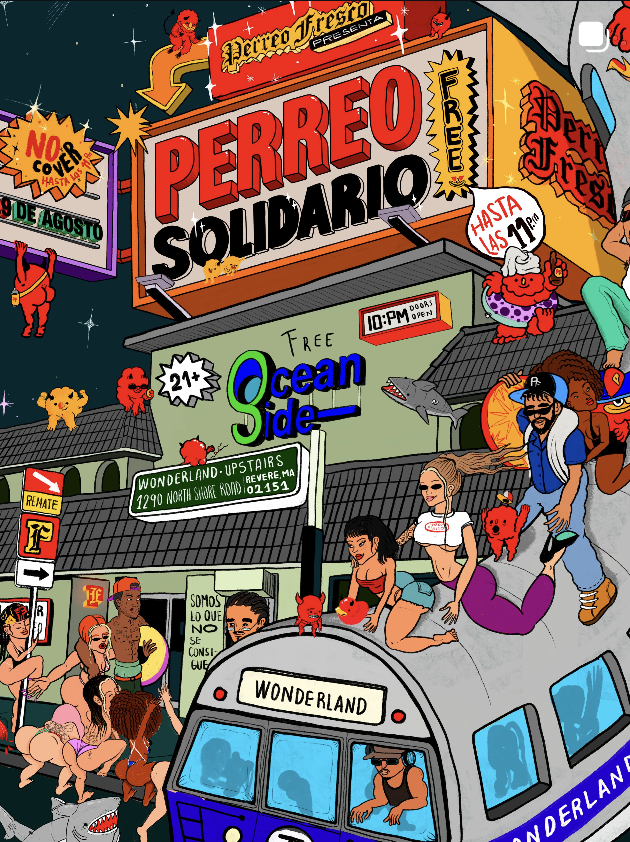
[Perreo Fresco, “Perreo Solidario,” 2026]
Fedra: I’ve witnessed a very different way of understanding transness here. One that, as a Latina, stands in tension with the way I understand myself as a woman. Here, being openly trans immediately locates you within queerness, as transness is seen as an identity that seeks to rebuke a patriarchal system of gendering. [6] But queer spaces often carry their own social norms—of how you ought to dress, how you ought to ‘perform’, and what you ought to desire.
Some of my desires and aspirations as a woman fly in the face of these expectations. Paradoxically, straight people—who mostly treat me as a woman, albeit a ‘different’ one, perhaps—often affirm my form of transness, unlike some queers, who judge it as a form of internalized shame. Because queer and straight spaces are so starkly split in the U.S., my ‘straightness’ often renders me unintelligible to queer gringos. I exist at the borderlands between both worlds.
Lizzie: Have you been able to reconcile this dissonance for yourself? Is there a space for you that bridges both worlds?
Fedra: I think I have found bridges within the Latino diaspora. These spaces often have a promiscuity and playfulness about social norms that feel more welcoming—el desmadre. Perreo, for instance, has become a very affirming musical home for me. [7] I have found that some of the perreo parties in Boston—my favorite being Perreo Fresco—are safe spaces for women that both exalt femininity and celebrate the desire for it. Perhaps surprisingly from the queer gringo point of view, these spaces tend to be populated by both straight people and sapphics, including tras people. [8] All coincide in their celebration and pursuit of femininity. Perreo serves as a bridge between these otherwise distinct worlds.
Before transitioning, as a gay man I was drawn away from the courtship rituals of reggaetón—outside of gay clubs—in part because I was more interested in glorifying masculinity, and in part because I felt threatened by the straight men in the scene. But now, these spaces afford me the opportunity to live out the passion, playfulness, and sensuality that I admire in my ancestras without bowing down to transphobic conceptions of femininity.
Lizzie: It sounds hard that the gringo queer community has made you feel judged for doing trans your way. I am happy you have found freedom in perreo. Un perreo liminal.
Fedra: ¡Exacto! I have come to see myself as a very liminal being, a woman who exists and travels constantly between worlds. I no longer feel a need to resolve the tensions I experience in myself and provoke in others.
Notes
[1] Huila is one of the southwestern departments—states—in Colombia. It is located east of the Pacific coast, north of the Amazon rainforest, and is tucked between the Central and Oriental stretches of the Colombian Andes mountain range. This is also Fedra’s paternal homeland.
[2] See Robin Dembroff. Real Men on Top: How Patriarchy Shapes Our Reality. Oxford, UK: Oxford University Press, 2026.
[3] “To see you means, well— / They see you and they stab you / They see you and they desire you / They see you but can’t even look at you / They see you and they kill you / They see you and they self-harm / They see you and they question themselves / They see you and they lose their shit / They see you and there’s nothing else they can / or want to see / Not in the same way / Not with that violent glint, you know / It’s rough, loca / It’s rough.” English translation provided by Fedra.
[4] See Caribe Afirmativo and Ford Foundation. Un Sistema Que Falla: Prejucio, Violencia, e Impunidad Contra Personas LGBTIQ+. Barranquilla, CO: Caribe Afirmativo, 2025.
[5] For more on the complex relationship between passing and trans pride see the following sources. In the Brazilian context, see Hélio Silva. Travesti – A Invenção Do Feminino. Rio de Janeiro, BR: Relume-Dumará, 1993; Tiago Duque. “‘A Gente Sempre Tem Coragem’: Identificação, Reconhecimento e as Experiências de (Não) Passar Por Homem e/Ou Mulher.” Cadernos Pagu 51 (2017): 1-32; and Pietra Azevedo. “‘Cansei da Linha Mapôa, Hoje Gosto de Chamar Atenção, de ser Travesti’: Visibilidades Sociais e Travestilidades Em Contextos Rurais e Interioranos.” Novos Debates 9:2 (2024): 1-27. In the Caribbean—specifically, Hispanic—context, see Jhoan Miguel Mateo Almonte. “Racismo Estructural, Cisnormatividad Racializada y Género Cimarrón: Historias de Vida de Mujeres Trans Negras En Santo Domingo, República Dominicana.” Tsafiqui: Revista Científica En Ciencias Sociales 15:2 (2026): 111-125 and Mark Padilla and Sheilla Rodríguez-Madeira. “Embodiment, Gender Transitioning, and Necropolitics among Transwomen in Puerto Rico.” Current Anthropology 62 (2021): 26-37.
[6] See Robin Dembroff. “Beyond Binary: Genderqueer as Critical Gender Kind.” Philosopher’s Imprint 20:9 (2020): 1-23.
[7] Perreos are reggeatón parties, originally started in Puerto Rico but now of global popularity. See Eduardo Cepeda. “How Perreo Became the Glue That Holds Reggaeton Together.” Remezcla. November 7, 2018.
[8] “Sapphics” is an umbrela term that names women or fem loving women, including—but not limited to—lesbians, bisexual women, amongst others. See Chandra McCann. “Why ‘Sapphic’ Is Back In Style.” Autostraddle. September 9, 2021.
References
Beauvoir, Simone de. The Second Sex. Trans. Constance Borde and Sheila Malovany-Chevallier. New York: Vintage Books, 2011.
Lorde, Audre. Zami: A New Spelling of My Name. New York: Crossing Press, 1982.
Rodríguez, Juana María. Sexual Futures, Queer Gestures, and Other Latina Longings. New York: NYU Press, 2014.
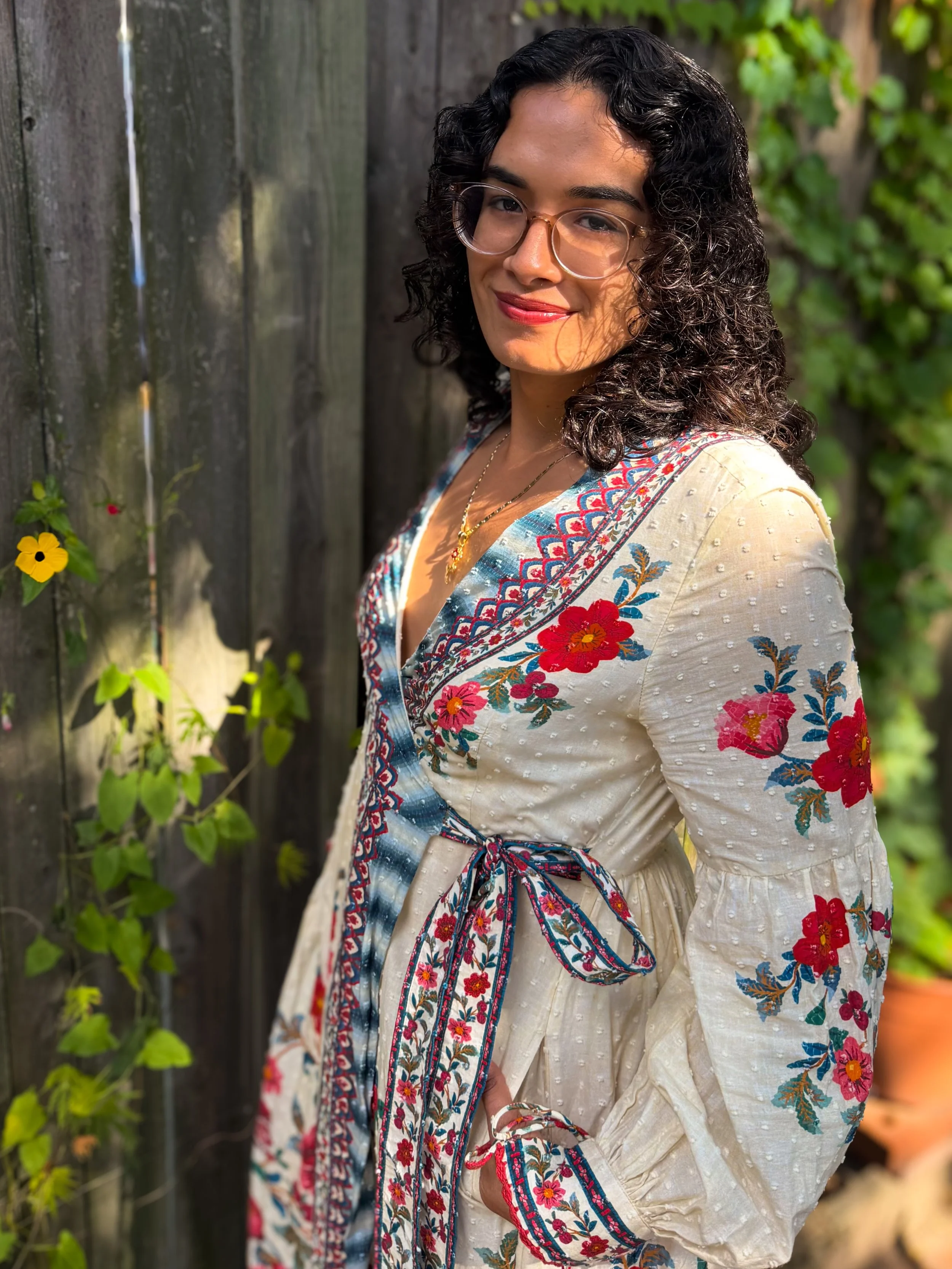
Fedra Cabrera Solano is a Ph.D. candidate in philosophy at Harvard University, originally from Bogotá, Colombia. Her dissertation weaves a conceptual narrative about the notion of erotic love developed in the thought of women philosophers and writers from different intellectual and geographical traditions at the end of the nineteenth and throughout the twentieth centuries. These figures include the Russian German writer and psychoanalyst Lou Salomé, Chilean poet and Nobel-laureate Gabriela Mistral, French existentialist Simone de Beauvoir, and U.S. poet and black feminist activist Audre Lorde.
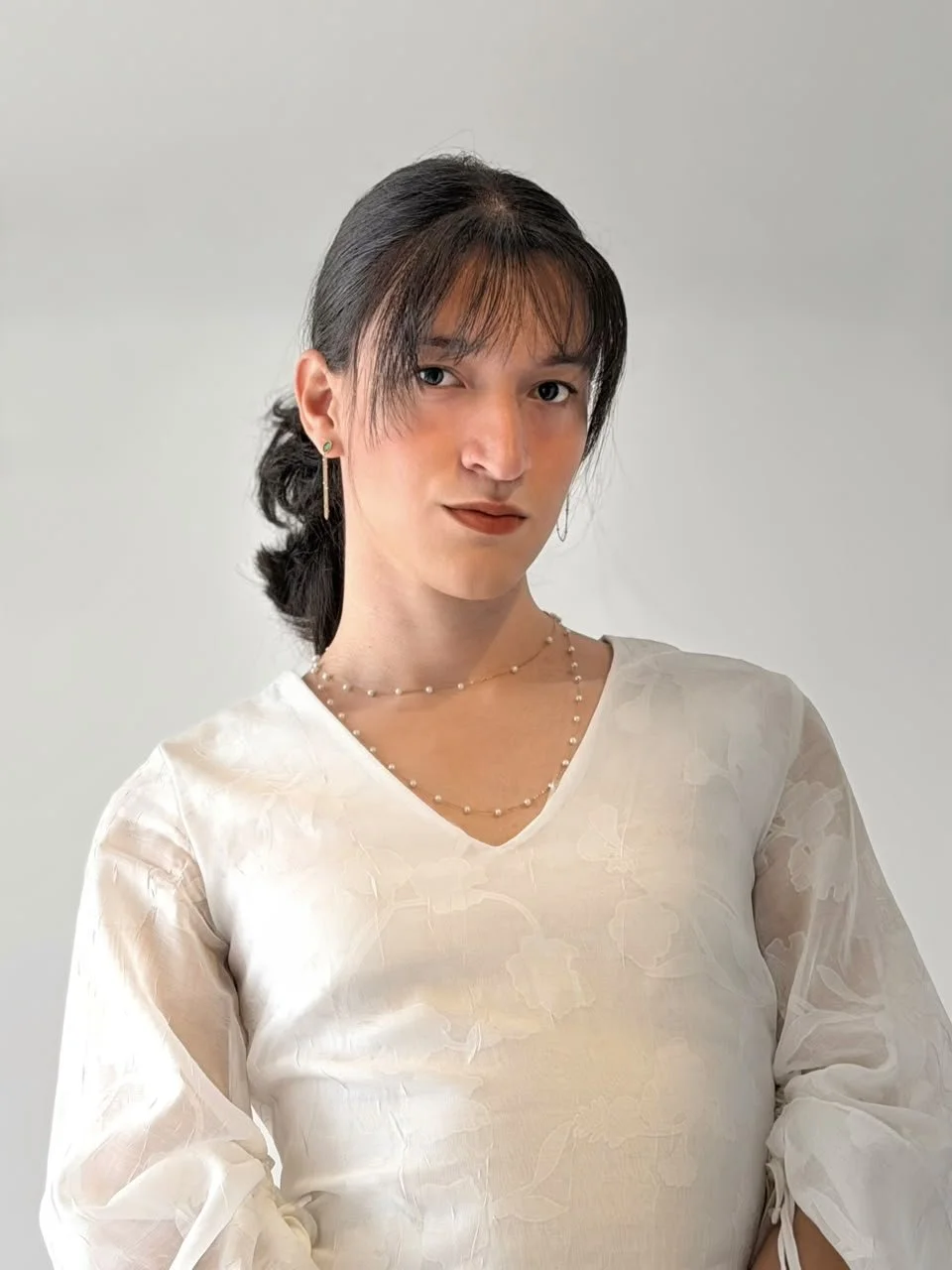
Dr. Elizabeth (Lizzie) Sánchez Sánchez (M.D.) is a physician and clinical researcher from Bogotá, Colombia. Her professional portfolio showcases a rigorous clinical and scientific narrative centered on pediatric subspecialties, rare diseases, and patient initiatives, bridging clinical practice with evidence-generation across fields such as pediatric cardiology, endocrinology, and neurology. She holds an M.D. from the Universidad del Rosario School of Medicine and Health Sciences and a Postgraduate Certificate in Foundations of Clinical Research from Harvard Medical School. Her scholarly work includes publications in BMC Public Health, Circulation and BMC Medical Education, alongside active research contributions at the Fundación Cardioinfantil, Instituto de Cardiología, and presentations at American Heart Association scientific sessions.