The Frantz Fanon Prize

The Frantz Fanon Prize
"Chaque génération doit,
dans une relative opacité,
découvrir sa mission,
l´accomplir ou la trahir."- Frantz Fanon, Les Damnés de la Terre (1961)
The Frantz Fanon Prize is awarded annually in recognition of up to three works in or of special interest to Caribbean thought. The nominations are made during the fall of each year, and the winners are chosen and announced by February of the succeeding year. The plaque of acknowledgment is given at a ceremony and book session at the annual conference of the Caribbean Philosophical Association. Only books published within 6 years of the nomination date can be considered for the award. Each winning author automatically becomes a member of the committee for the prize.
The Frantz Fanon Lifetime Achievement Award
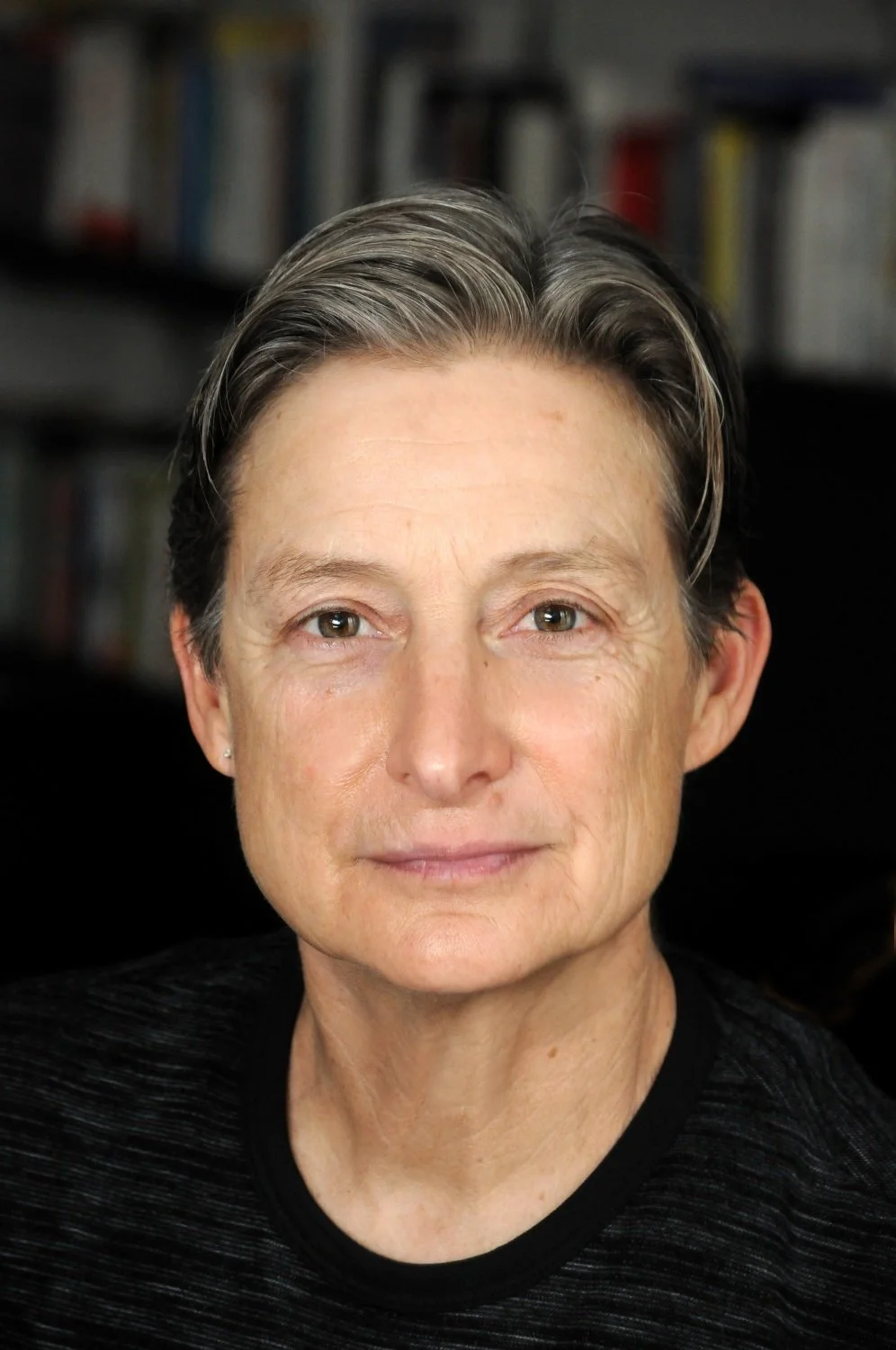
Judith Butler
Judith Butler is Distinguished Professor in the Graduate School and formerly the Maxine Elliot Chair in the Department of Comparative Literature and the Program of Critical Theory at the University of California, Berkeley, and they are the Hannah Arendt Chair at The European Graduate School (EGS) in Switzerland. A recipient of eighteen honorary doctorates, their accolades include the Andrew Mellon Award for Distinguished Academic Achievement in the Humanities (2009–2013), Fellow of the British Academy, and Fellow of the American Academy of Arts and Sciences. Their service to the profession includes: President of the Modern Language Association and to the public includes being a member of the advisory board for Jewish Voices for Peace.
With their books alone receiving nearly 300,000 citations in scholarly journals and books, along with many additions in publications devoted to the general public, Professor Butler stands among the most cited philosophers, scholars, and public intellectuals worldwide.
The Caribbean Philosophical Association’s Awards Committee selected Butler for the Frantz Fanon Lifetime Achievement Award for their extraordinary work in Critical Theory, Philosophy, Psychoanalysis, and Queer Theory and their activist work as an institution-builder and outspoken voice of conscience on Israel/Palestine, antiblack racism, transphobia, and many other struggles for the dignity of life across the globe. Fanon was a philosopher, psychiatrist, and revolutionary whose conscience included being critical even of his comrades and postcolonial states. Butler’s work is in the spirit of Fanon’s commitment to the proverbial Damned of the Earth and the importance of shifting the geography of reason in the quest for dignity, liberation, and freedom.
Rashid Khalidi, the 2025 Fanon Lifetime Achievement Award Laureate, states, “This is an award well deserved for a true lifetime of achievement in fields that are fully aligned with the causes that Frantz Fanon fought for.” Adds the 22017 Nicolás Guillén Lifetime Achievement Laureate Hortense Spillers, “When a definitive history of feminist thought and movement of the Twentieth and early Twenty-First Centuries is written, Judith Butler’s work will help light the way. This award from Caribbean Philosophical Association completes the story.” Maureen MacGrogan, the famed former Routledge editor who published Butler’s books Gender Trouble and Bodies That Matter: “Butler remains the same passionate and committed person they always were, a brilliant and original thinker…, and someone always fighting the good fight.”
Jacqueline Martinez, President of the Caribbean Philosophical Association agrees:
Judith Butler is a highly deserving recipient of the Franz Fanon Lifetime Achievement Award. Professor Butler is a public intellectual who engages the most pressing social issues confronting our world and offers a steady and uncompromising voice for the development of a genuinely democratic and open polis that does not function based on the exclusion of some groups over others. Professor Butler’s work gives us the highest levels of intellectual engagements offering deep insight in our understanding sex and gender, race, religion and nation in contexts of struggle, conflict, and violence.
Posthumous Frantz Fanon Lifetime Achievement Award
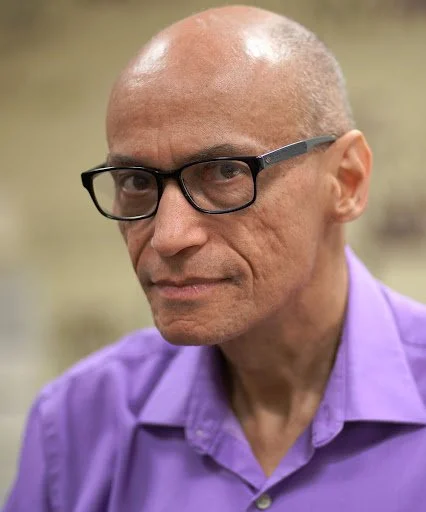
Charles W. Mills
The first ever posthumous Caribbean Philosophical Association award is being conferred in the memory of the Jamaican American philosopher Charles W. Mills. Nominees eligible for this award must have joined the ancestors within five years of nomination. Professor Mill passed on September 20, 2021.
Mills was a globally recognized philosopher whose The Racial Contract (1997), Blackness Visible (1998), From Class to Race (2003), Radical Theory, Caribbean Reality (2010), Black Rights/White Wrongs (2017) stand as major works, with The Racial Contract standing as a recent classic. Mills presented papers regularly at the Caribbean Philosophical Association international conferences and played a major role in mentoring young scholars in the organization and many others, as attested to in a memorial essay by Georgetown’s Olúfémi O. Táíwò for The Nation.
Paget Henry, whose Caliban’s Reason: Introducing Afro-Caribbean Philosophy (2000) was the first recipient of the Frantz Fanon Outstanding Book Award, reflects:
Given the importance of his contributions to Africana philosophy and the unexpected nature of his passing, posthumously conferring on our dear colleague and friend, Charles Mills, the Frantz Fanon Lifetime award is just the right thing for us to do. His book, The Racial Contract transformed liberal, social contract, and racial theorizing in both profound and lasting ways. His memory will always be precious to us, his ironic sense of humor and the relentless fighter that he was against white supremacy.
According to the 2010 Frantz Fanon Lifetime Achievement Award Winner Bernard Boxill,
Charles W. Mills was among the very best political philosophers of his generation. His life’s great work was to expose the Racial Contract and to help heal and correct the injustices it both caused and concealed. He knew that he had not completed that work and left political philosophers white and black to do so. We must not fail him.
Adds President Jacqueline Martinez:
With this Posthumous award, we recognize the tremendous impact Charles Mills has had on our understanding of what it means to struggle against the dominance of the “racial contract” that sustains racism and white domination. Professor Mills’ decades of work have revealed the importance of the work of Caribbean theorists and philosophers in recognizing the struggle against political realities of colonialism that would reduce those colonized to less than human. Professor Mills’ work stands as a testament to humanity that refuses degradation.
Frantz Fanon Outstanding Achievement Award
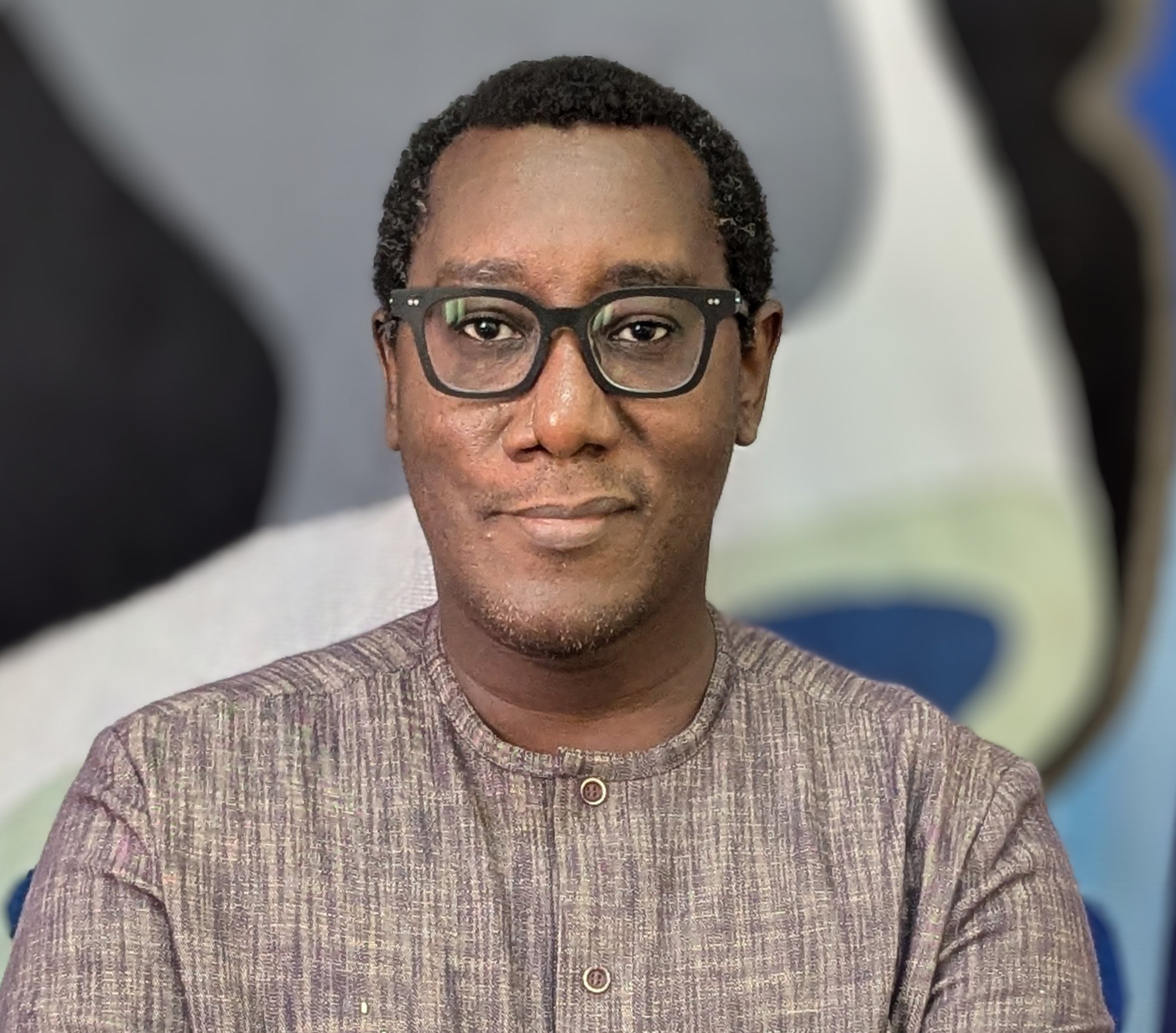
Mouhamadou El Hady Ba
Mouhamadou El Hady Ba (generally referred to as Hady Ba) holds a PhD in cognitive science from the Jean Nicod Institute and is an Associate-Professor of philosophy at Cheikh Anta Diop University in Dakar (UCAD) and an associate research scholar at the University of Connecticut in Storrs. Former Head of the Philosophy Department of the Faculté des Sciences et Technologies de l’Éducation et de la Formation (FASTEF), Dr. Ba is currently Director of Cultural and Scientific Activities at Cheikh Anta Diop University in Dakar. Dr. Ba mainly teaches philosophy of science, logic, and philosophy of mind, and his research focuses on epistemologies of the Global South and animal cognition. Dr. Ba has been a Fulbright Scholar at the University of Connecticut and Columbia University, International Supporting Faculty at the School of Collective Intelligence at Mohamed 6 Polytechnic University in Morocco, Visiting Professor at the École Normale Supérieure de la Rue d'Ulm and the École des Hautes Études en Sciences Sociales in Paris, and Visiting Scholar at the University of Turin. Socially engaged, Dr. Ba has been a union leader and is a founding member of the IPODE Think Tank, where he served as the first Managing Director and then Scientific Director. In this capacity, he co-authored, with Pierre Amath Mbaye, one of the first reflections on the risks of contagion from the Malian crisis to Senegal. He has also produced a study on the influence of movements on the fringes of Islamic brotherhoods on the pacification of part of Senegalese youth. Hady Ba is the author of Illusions frégéennes: Logique, Langage et Pensée (2024) and scientific articles on computer science, epistemology, psychology, and political philosophy.
The Awards Committee selected Professor Ba for the Fanon Outstanding Achievements Award not only for his extraordinary work in philosophical logic, cognitive science, epistemology, linguistics, political philosophy, computational security studies, and contemporary African philosophy, but also his activist work as an institution-builder, especially in his roles Director of Cultural and Scientific Activities at Cheikh Anta Diop University and a mentor to young scholars and artists from historically excluded communities in Senegal and across the globe. Frantz Fanon was also a philosopher and scientist. The Committee regards Ba’s work as in the spirit of Fanon’s commitment to the proverbial Damned of the Earth and the importance of shifting the geography of reason in the quest for dignity, liberation, and freedom.
According to President Jacqueline Martinez,
Professor Mouhamadou El Hady Ba is an international scholar whose work traverses philosophy and cognitive science with a fundamental commitment to bringing people together to create independent Pan-African perspectives that address problems of public policy with progressive and humanistic ideals. Professor Hady Ba is a founding member and first scientific director of Think Tank IPODE, a grassroots organization designed to cultivate expertise that can animate public debate and further develop public policy that servers progressive and humanistic ideas.
The Frantz Fanon Award for Outstanding Book in Caribbean Thought
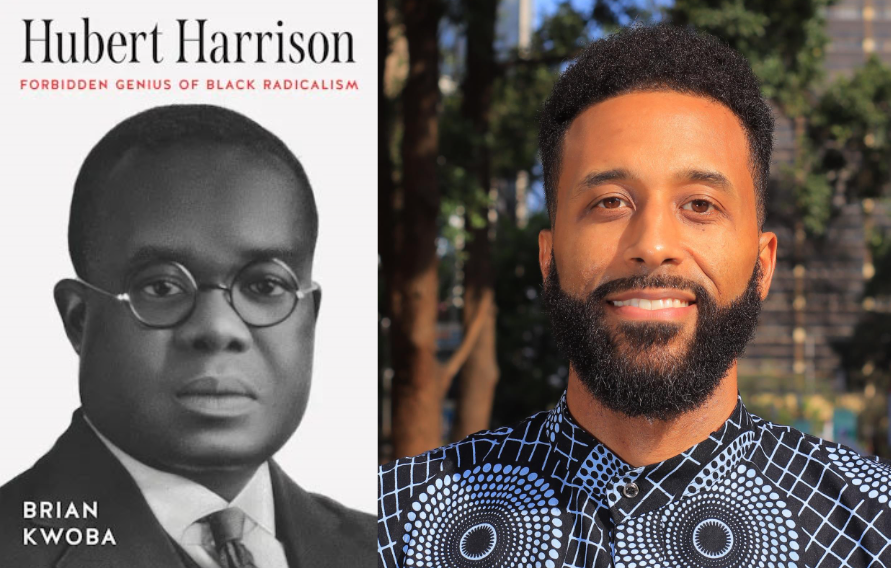
Hubert Harrison: Forbidden Genius of Black Radicalism
Dr. Brian Kwoba is Associate Professor of History and Director of the African and African American Studies (AAAS) Program at the University of Memphis. His research centers on political thought and social movements among people of African descent in the United States and across the globe. While completing his doctoral degree at the University of Oxford, he co-founded the Oxford Pan-Afrikan Forum (OXPAF) and the #RhodesMustFall movement to decolonize education at Oxford. Over the past two decades, Dr. Kwoba has been an activist on issues including peace building, immigrant workers’ rights, socialism, climate justice, Falastin, and the movement for Black lives.
According to one of the referees,
[Hubert Harrison: Forbidden Genius of Black Radicalism] is clearly a work of admiration, identification, and love. The author’s presence is pronounced in ways that challenges usual expectations of history as documentation and reportage.… It is clear in the way Kwoba has written this book that he wants Harrison’s life to stimulate reflection and be of interest for readers beyond specialists. As a work in its own right, it is a model example of excellent writing and intellectual engagement reminiscent of what I have seen primarily in philosophical biographies, wherein the subject’s thought is paramount, albeit without neglecting biographical detail. It is with this last point in mind that I recommend this book receiving the Fanon outstanding book award.
President Jacqueline Martinez adds:
Brian Kwoba’s Hubert Harrison: Forbidden Genius of Black Radicalism brings to light the incredible life and work of Hubert Harrison, an intellectual giant whose life stands as an example for radical thought today. In this impressive work, Professor Kwoba lays bare the uncompromising brilliance of Harrison as he challenged leading black figures of his time, as well as religious and political institutions for their tacit (or not) embrace of relations of domination. Professor Kwoba has given us a great gift that offers insight not only into the remarkable life of Hubert Harrison but also into what it means to be a black radical. Professor Kwoba’s work is most deserving of this award named in honor of Frantz Fanon.
Frantz Fanon Prize — Previous Recipients
2025
LIFETIME ACHIEVEMENT
Rashid Khalidi
BOOK
Sophie Maríñez, Spirals in the Caribbean: Representing Violence and Connection in Haiti and the Dominican Republic. University of Pennsylvania Press, 2024.
Kristin Waters, Maria W. Stewart and the Roots of Black Political Thought. University of Mississippi Press, 2021.
2024
LIFETIME ACHIEVEMENT
Chabani Manganyi
Sylvia Marcos
BOOK
Denise Ferreira da Silva, Unpayable Debt. Sternberg Press, 2022.
Camille Robcis, Disalienation: Politics, Philosophy, and Radical Psychiatry in Postwar France. University of Chicago Press, 2021.
OUTSTANDING ACHIEVEMENT
Stephon Alexander
2023
LIFETIME ACHIEVEMENT
Gerald Horne
BOOK
Jean Casimir, The Haitians: A Decolonial History. University of North Carolina Press, 2020.
2022
LIFETIME ACHIEVEMENT
Angela Y. Davis
Barbara Ransby
Boaventura de Sousa Santos
OUTSTANDING ACTIVIST
Amanda Alexander
BOOK
Dylan Rodríguez, White Reconstruction: Domestic Warfare and the Logics of Genocide. Fordham University Press, 2021.
2021
LIFETIME ACHIEVEMENT
Hussein Bulhan
Silvia Federici
Rita Laura Segato
BOOK
Adom Getachew, Worldmaking after Empire: The Rise and Fall of Self-Determination. Princeton University Press, 2019.
2020
LIFETIME ACHIEVEMENT
María Lugones
BOOK
Julius Scott, The Common Wind: Afro-American Currents in the Age of the Haitian Revolution. Verso, 2018.
2019
LIFETIME ACHIEVEMENT
Roxanne Dunbar-Ortiz
Catherine Walsh
OUTSTANDING ACHIEVEMENT
Vijay Prashad
BOOK
Ato Sekyi-Otu, Left Universalism, Africacentric Essays. Routledge, 2018.
2018
LIFETIME ACHIEVEMENT
Samir Amin
Souleymane Bachir Diagne
OUTSTANDING ACHIEVEMENT
Mireille Fanon-Mendès-France
BOOK
Elsa Dorlin, Se défendre: Une Philosophie de la Violence. Paris: La Découverte, 2017.
2017
LIFETIME ACHIEVEMENT
Carole Boyce Davies
Maureen MacGrogan
OUTSTANDING ACHIEVEMENT
Eduardo Mendieta
BOOK
Michael Neocosmos, Thinking Freedom in Africa. Johannesburg, SA: Wits UP, 2016.
Santiago Slabodsky, Decolonial Judaism: Triumphal Failures of Barbaric Thinking. New York: Palgrave Macmillan, 2014.
2016
LIFETIME ACHIEVEMENT
Sonia Dayan-Herzbrun
BOOK
Glen Coulthard, Red Skin, White Masks: Rejecting the Colonial Politics of Recognition. U of Minnesota P, 2014.
Peter J. Park, Africa, Asia, and the History of Philosophy: Racism in the Formation of the Philosophical Canon, 1780-1830. Albany, NY: State University of New York P, 2013.
2015
LIFETIME ACHIEVEMENT
Grace Lee Boggs
P. Magobo More
BOOK
José Guadalupe Salgado Gandarilla, Asedios a la totalidad. Poder y política en la modernidad desde un encare de-colonial. UNAM, 2012.
Olúfémi Táíwò, How Colonialism Preempted Modernity in Africa. Indiana UP, 2010.
2014
LIFETIME ACHIEVEMENT
Leonard Harris
(Letter of Appreciation by Harris)
Abdul JanMohamed
BOOK
John Drabinski, Levinas and the Postcolonial: Race, Nation, Other. Edinburgh UP, 2013.
2013
LIFETIME ACHIEVEMENT
Fernando Picó
Carlos Rojas Osorio
2012
LIFETIME ACHIEVEMENT
Keith Sandiford
BOOK
Nathalie Etoke, Melancholia Africana: L’indispensable dépassement de la condition noire. Paris: Éditions du Cygne, 2010.
2011
LIFETIME ACHIEVEMENT
Molefi Kete Asante
Michel Rolph-Trouillot
BOOK
Susan Buck-Morss, Hegel, Haiti, and Universal History. U of Pittsburgh P, 2009.
Marilyn Nissim-Sabat, Neither Victim nor Survivor: Thinking toward a New Humanity. Lanham, MD: Lexington Books, 2009.
2010
LIFETIME ACHIEVEMENT
Bernard Boxill
(Letter of Appreciation by Boxill)
BOOK
Oscar Guardiola-Rivera, What if Latin America Ruled the World?: How the Second World Will Take the First into the 22nd Century. London: Bloomsbury Publishing PLC; Export Edition, 2007.
Ángel Quintero, Cuerpo y cultura: Las músicas “mulatas” y la subversión del baile. Iberoamericana/Vervuert, 2009.
2009
LIFETIME ACHIEVEMENT
Enrique Dussel
Nigel Gibson
BOOK
Linda Martín Alcoff, Visible Identities: Race, Gender, and the Self. Oxford UP, 2006.
Nigel Gibson, Fanon: The Postcolonial Imagination. Polity Press, 2003.
2008
BOOK
Drucilla Cornell, Moral Images of Freedom: A Future for Critical Theory. Lanham, MD: Rowman & Littlefield, 2007.
Patricia Donatien-Yssa, L’exorcisme de la Bles: Vaincre la Souffrance dans Autobiographie de ma Mere de Jamaica Kincaid. Paris: Manuscrit, 2007.
2007
BOOK
Elias Bongmba, Dialectics of Transformation in Africa. New York: Palgrave, 2006.
Brinda Mehta, Diasporic (Dis)Locations. Kingston, JA: U of the West Indies P, 2004.
Catherine Reindhardt, Claims to Memory: Beyond Slavery and Emancipation in the French Caribbean. New York: Berghahn Books, 2006.
2006
BOOK
Walter Mignolo, The Idea of Latin America. Malden, MA: Blackwell Publishers, 2006.
2005
BOOK
Alejandro J. De Oto, Política del Sujeto Postcolonial. Mexico City, MX: El Centro de Estudios de Asia y Africa, El Colegio de México, 2003.
Sibylle Fischer, Modernity Disavowed: Haiti and the Cultures of Slavery in the Age of Revolution. Durham, NC: Duke UP, 2004.
2004
BOOK
Paget Henry, Caliban’s Reason. New York: Routledge, 2000.
The Frantz Fanon Prize Committee
Molefi Kete Asante, Temple University
Marina Banchetti-Robino, Florida Atlantic University
Souleymane Bachir Diagne, Columbia University
Elias K. Bonbmba, Rice University
Bernard Boxill, University of North Carolina, Chapel Hill
Carole Boyce Davies, Cornell University
Susan Buck-Morss, CUNY Graduate Center
Drucilla Cornell, Rutgers University (Emeritus)
Glen Coulthard, University of British Columbia
Sonia Dayan-Herzbrun, University Paris-Diderot
Patricia Donatien-Yssa, Université Antilles-Guyane
Elsa Dorlin, Vincennes/St. Denis Paris 8 University
John Drabinski, Amherst College
Roxanne Dunbar-Ortiz, California State University East Bay
Enrique Dussel, Universidad Autónoma de la Ciudad de México
Nathalie Etoke, CUNY Graduate Center
Sibylle Fischer, New York University
José Guadalupe Salgado Gandarilla, Universidad Autónoma Metropolitana-Iztapalapa
Nigel Gibson, Emerson College
Oscar Guardiola-Rivera, Birkbeck College
Leonard Harris, Purdue University
Clevis Headley, Florida Atlantic University
Paget Henry, Brown University
Abdul JanMohamed, University of California, Berkeley
Maureen MacGrogan, Rowman & Littlefield
Nelson Maldonado-Torres, University of California at Berkeley
Linda Martín Alcoff, CUNY Graduate Center
Thomas Meagher, Sam Houston State University
Brinda Mehta, Mills College
Eduardo Mendieta, Pennsylvania State University
Walter Mignolo, Duke University
Mabogo More, University of Limpopo
Michael Neocosmos, Rhodes University
Marilyn Nissim-Sabat, Lewis University
Alejandro de Oto, Universidad Nacional de la Patagonia-Argentina
Peter J. Park, The University of Texas at Dallas
Vijay Prashad, Tricontinental: Institute for Social Research
Ángel Quintero, Creighton University
Catherine Reinhardt-Zacair, Chapman University
Neil Roberts, Williams College
Jean-Paul Rocci, University of Paris VII
Carlos Rojas Osorio
Ato Sekyi-Otu, York University
Keith Sandiford, University of Manitoba
Santiago Slabodsky, Hofstra University
Olúfémi Táíwò, Cornell University
Catherine Walsh, Universidad Andina Simón Bolívar