Raising Our Voices: The Spirit of Caridad in the Cuban Diaspora

By Jadele McPherson
Sea el santisimo, sea. These call and response songs have been with me since I grew in my mother’s womb. As a singer, I can appreciate how this cycle of songs, which are sung for the dead in spiritist masses—misas espirituales—communicate the importance of la fe, la esperanza y la caridad. However, it was not until much later in life that I understood that labor organizing, fighting for racial justice, and forming Black mutual aid societies were also fueled by the idea of caridad, the act of performing benevolent actions for others. The active participation of my elders in La Unión Martí Maceo Society in Tampa, and then Club Cubano Inter-Americano in Harlem (which they founded in 1945), stemmed from a cultural practice of caridad that had helped build the first cabildos in Cuba. [1]
This concept of caridad is also central in Afro-Cuban religiosity, where devotees of Catholicism, the ancestors, and orisha—spirits that spring from consciousness (ori)—perform acts of caridad to help their families and those who petition to them in need. In the following, I reflect on the philosophies of caridad–the spirit of giving to others—that have inspired over a hundred years of Afro-Latino mutual aid organizing.
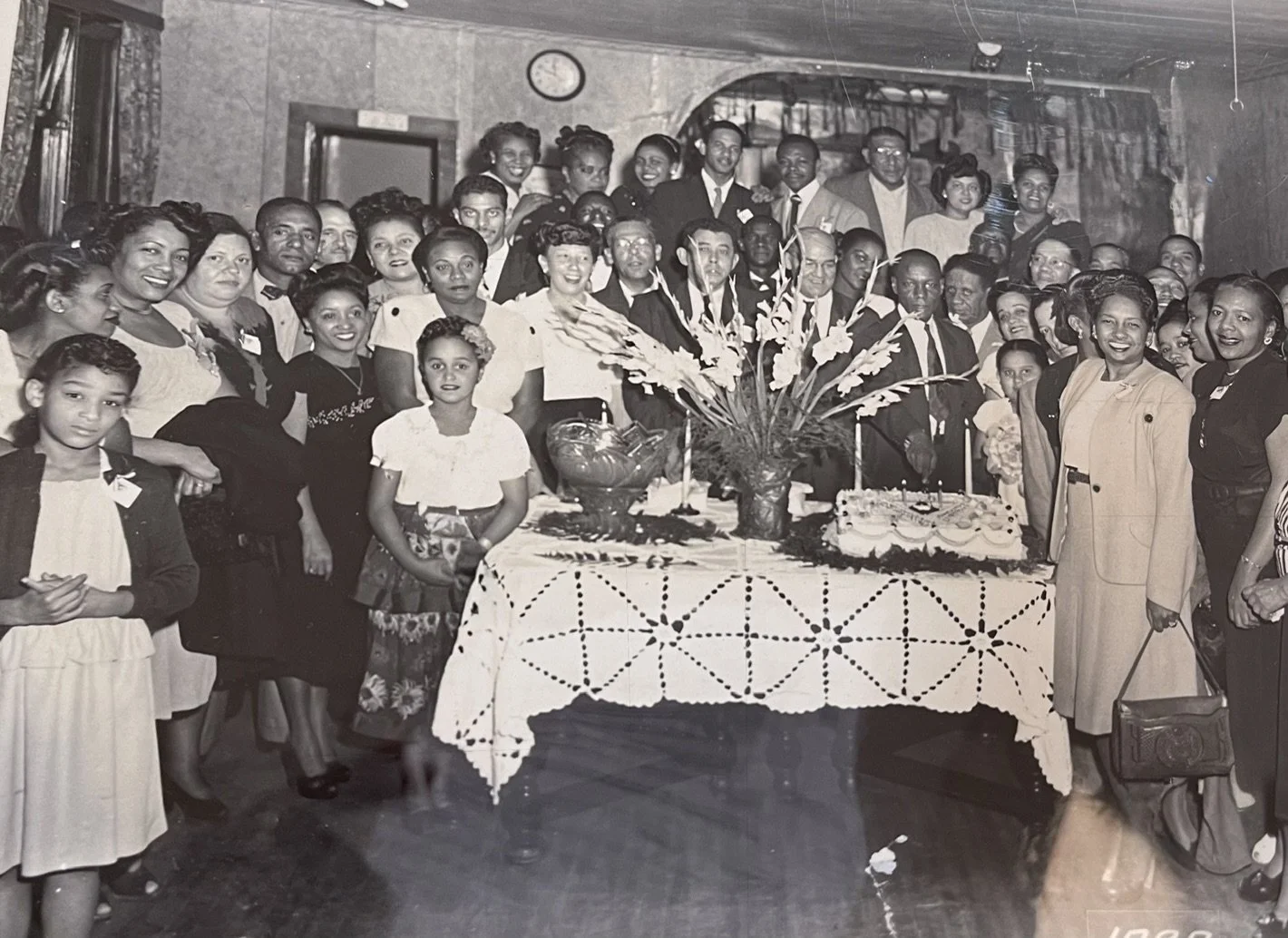
[Schomburg Center for Research in Black Culture, “Marcos Llerena cuts cake at Club Cubano Inter-Americano,” 1947.]
The first Afro-Cuban mutual aid societies in the United States are significant because their histories unveil the divisive racial politics that have happened within Cuban diasporic communities since the late nineteenth century. The Círculo Cubano, the first Cuban mutual aid society in Tampa, was initially racially integrated, but the Black members were expelled after the passing of Plessy v. Ferguson. [2] In response, Black Cubans merged two local factions, Los Libres Pensadores de Martí y Maceo and La Unión, in 1904 to form their own mutual aid society.
The Afro-Cubans who founded the Unión Martí Maceo Society were mostly cigarmakers who had donated their salaries to fund the revolutionary wars for Cuban independence during Spanish colonialism. Ybor City, the center of the cigar industry by the 1880s, was where Cubans, Spaniards, and Italians built foundational mutual aid societies that still exist today. In the case of Cubans, the question of being racially identified as black in the American South was unique. Caridad became one of the ways that Afro-Cubans navigated racial discrimination in the diaspora, as well as the political struggles that led to the birth of the Cuban Republic on May 20, 1902. My research thinks through the implications of this painful history and its significance for contemporary political tensions, particularly between Cubans and African Americans living in Florida.
This research also has personal significance. My family played a foundational role in the forming of these clubs. After arriving in New York from West Tampa, my great-uncle Marcos Llerena collaborated with poet Eusebia Cosme, from Santiago de Cuba, when he served as one of the first Presidents of the Club Cubano Inter-Americano in 1947. [3] Corroborating this fact through archival research into the Martí Maceo Society records, housed at the University of South Florida in Tampa, raised a great deal of questions: Why hadn’t the story of Marcos Llerena and his wife Carmen Ayala, cigar workers who were married for over fifty years, been told? What role did Afro-Cubans play during the republican era from 1902-1959?
Moreover, half of the Afro-Cubans living in Tampa migrated to northern cities in order to escape the racial violence of the Jim Crow South alongside African Americans. [4] My family’s journey from Harlem to Mott Haven in the South Bronx happened when there was an influx of public housing that offered economic refuge to poor and working-class black families during the 1950s. The Patterson Houses were the site of many of my formative memories, including that of eating Cuban food, like oven baked congrí (to give that even crisp to the raspa), and of learning spiritist practices that taught me the values of mutual aid. They taught me that shoes and clothes that were outgrown were not trash, that newly arrived immigrants sleeping in our living rooms were not strangers, but family, and that food was meant to be shared with any hungry person in the community. They taught me the value of caridad.
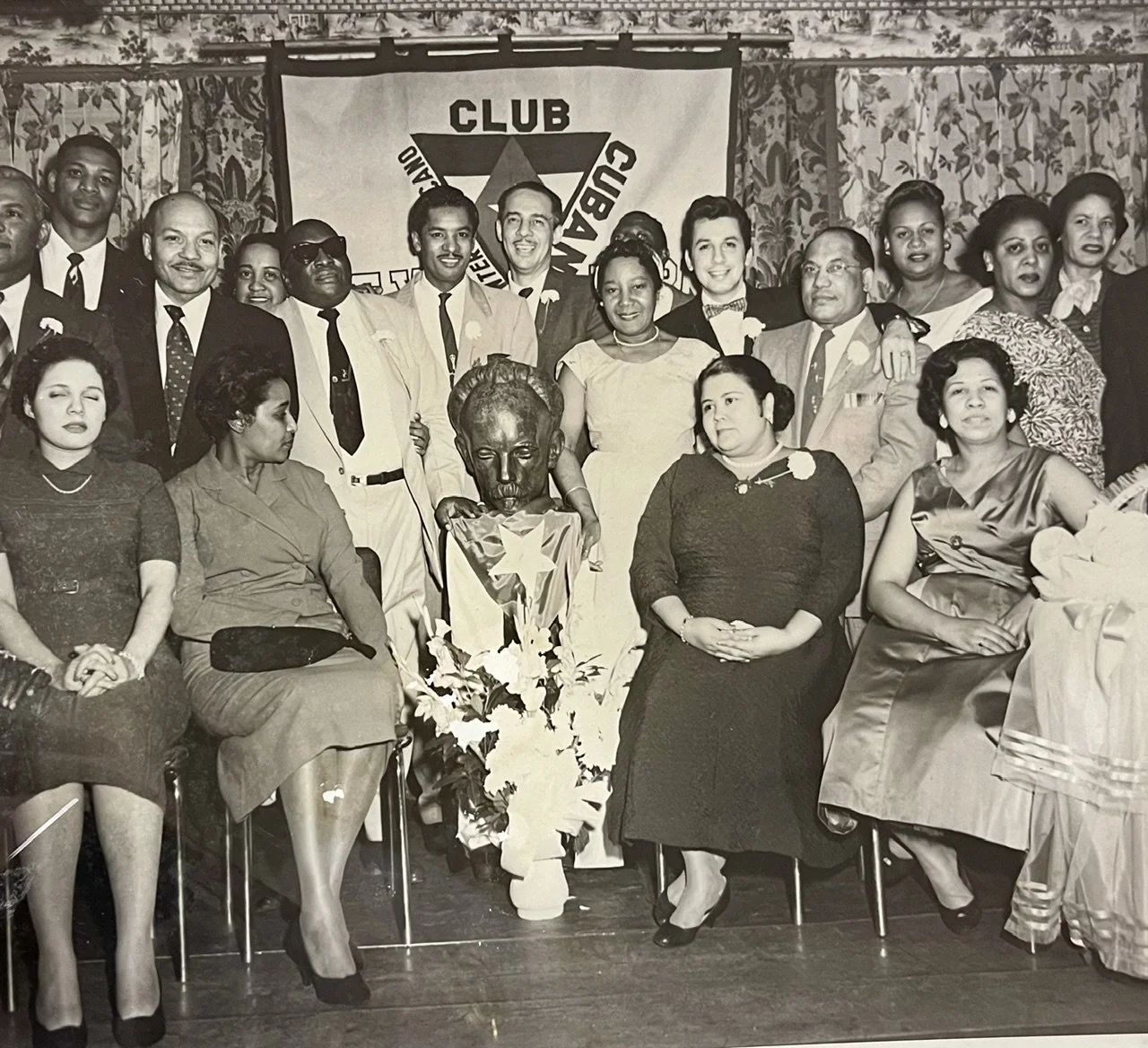
[Schomburg Center for Research in Black Culture, “Club Cubano Inter-Americano officials and guests at an Acto a Martí celebration,” 1957]
However, caridad is not just a way to survive hard times; it is also a bright spark of creativity that has produced artistic legacies [Listen to 3 for Ochun]. For instance, Afro-Cuban artists responded to racial discrimination by developing distinctive sounds and soundtracks. In addition, my time in the photo and visual archive at the Schomburg Center for Research in Black Culture revealed that one of the first events at Club Cubano featured a joint performance by the declamadora-poet and radio hostess, Eusebia Cosme, and the composer-musician, Arsenio Rodríguez. This performance was done in honor of the Grito de Baire, which launched the final War of Independence in 1895.
Their collaboration was an exciting discovery that demonstrated Club President Llerena showed an early dedication to the performing arts, and that he had known two of the most significant artistic figures in the Cuban diaspora. Both Cosme and Rodríguez were renowned artists at the time, and so giving their artistic gifts in service of the Club was one of the ways they practiced caridad [Listen to Paso En Tampa]. Musical events were also the catalyst for building diasporic relationships with Caribbean immigrants and African Americans, who also became members of the Club Cubano Inter-Americano. [5] Yet these Afro-Cuban performance histories remain absent from the tours and literature about Cubans in the diaspora.
The social memory of these clubs is also dwindling and mostly unknown amongst the newer generations of Cubans migrating to the United States. The current humanitarian and political crisis in Cuba—where days long blackouts have rendered the island into a violent standstill for the starving population—has led Cuban migrants to take both old routes by sea and make new routes by land to the United States. [6] Today, Cuban migrants are leaving the island to flee daily outages caused by power grid collapses, increasing food shortages, and decreasing access to water, fuel, and public transportation.
Cuban futures rely not only on dealing with the present but also on grappling with the past, which means recognizing the importance of historical figures like Marcos Llerena. The diasporic communities of the past did not view the social and political crises facing Afro-Cubans in a vacuum. They understood then, just as we must today, that mutual aid can positively impact the everyday people who suffer as a result of the political crises persisting across the Caribbean region–in Haiti and the Dominican Republic, Puerto Rico, Jamaica, and throughout the islands. While it is tempting to romanticize what the first Afro-Cuban mutual aid societies could do to intervene, it seems that the spirit of their political solidarities is the most fruitful to addressing our contemporary crises.
These ancestors continue to speak and sing—they urge us to continue building transnational networks in the spirit of caridad. The past and present are proof that everyday people cannot wait for governments to offer solutions to colonial inequalities. To that end, art is not merely entertainment; rather it is essential to the political and mutual aid organizing that imagines futures beyond the haunting grasp of racial capitalism.
Notes
[1] Cabildos de nación were African based mutual aid organizations, sponsored by the Catholic Church, that served as sacred, civic, and cultural centers for Afro-Cubans during colonialism.
[2] The U.S. Supreme Court ruling of Plessy v. Ferguson (1896) established the law of “separate but equal” which reinforced racial segregation in all aspects of social, public life. Ybor City and the cigar making enclaves were racially integrated, and so the passing of this law meant that like African Americans, Afro-Cubans could not access the same social clubs, churches, schools and housing as Cubans who were racialized as white.
[3] For more information on artistic performances in these clubs, see Jadele McPherson. Vamos a Vencer-We Will Overcome: The Sonic Performances of Afro-Cubans in Tampa. PhD diss., CUNY Graduate Center, 2025.
[4] For more on Afro-Cuban migration, see Susan D. Greenbaum. More Than Black: Afro-Cubans in Tampa. Gainesville, FL: University Press of Florida, 2002 and Frank Andre Guridy. Forging Diaspora: Afro-Cubans and African Americans in a World of Empire and Jim Crow. Chapel Hill, NC: University of North Carolina Press, 2010.
[5] For more on the concept of Cubanidad and the experiences of Afro-Cubans in the United States, see Nancy Raquel Mirabal. Suspect Freedoms: The Racial and Sexual Politics of Cubanidad in New York, 1823-1957. New York, NY: New York University Press, 2017.
[6] For instance, Cubans are now increasingly undertaking a dangerous land route by hiking across the Panamanian Darién Gap to reach the Mexico-U.S. border. For more on this journey, see Santiago Torrado. “The Gulf Clan-controlled Darién Gap sees record-breaking numbers of migrants.” El País. November 9, 2023.
Cover Photo Credit: Schomburg Center for Research in Black Culture, “Club Cubano Inter-Americano Building Front,” 1970s.
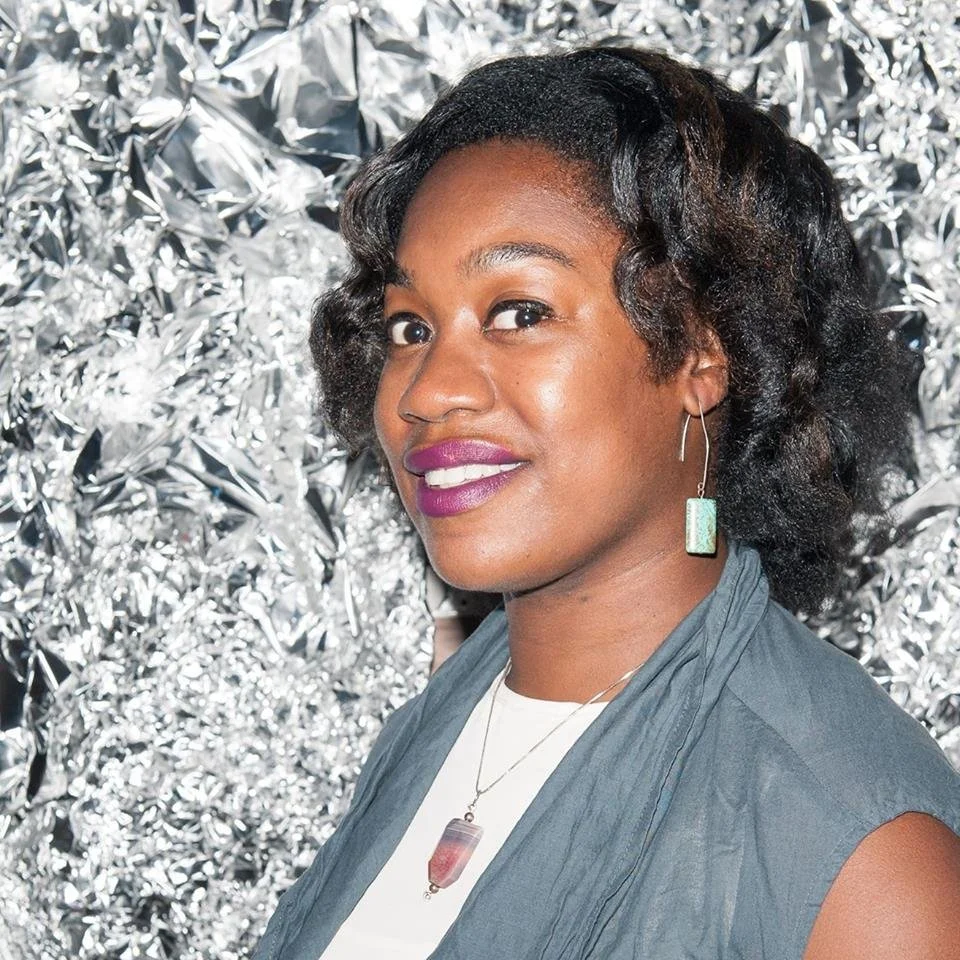
Dr. Jadele McPherson is an artist-scholar who is interested in studying the impact of sound on social and cultural movements throughout the African Diaspora, with a focus on Afro-Cuban arts and Caribbean migrations. Her current work amplifies the stories of Afro-Latinx artists and historical actors who participated in labor organizing, securing medical care, forming mutual aid networks and dismantling racial segregation in the U.S. Please see more of her work here.