Beyond the Trans-Atlantic: On Japanese Reception of Caribbean Thought

By Takeshi Morisato
Our study of world literatures and non-western philosophies can be quite Eurocentric and colonial, especially when we read these traditions in western academia. This is partly because our framework of investigation is often mediated through the bounds of European languages. In western-style universities (which also exist outside the UK or Europe), we also represent the “few and rare,” the minoritized professor in a sea of white. In such environments, our research and teaching too often feels as if we are condemning a plethora of world intellectual traditions and their beautifully diverse cultures to an early mass “grave.” [1] After all, we are still talking about this in English as academics with qualifications from western higher institutions in which Caribbean, African, or Japanese philosophical traditions are not recognized as legitimate forms of thought in the domain of academic philosophy or literature.
Even if we offer one or two courses on these topics as a minor exception, we tend to read Caribbean or Japanese texts in a way that makes most sense to ourselves within the bounds of the Anglophone-European imaginary. It is not possible for a single academic to teach the whole history of European philosophy but we all structurally assume that it can be done for Africana or Asian philosophy. Our job is always already assumed to be that of making our intellectual traditions palpable to the Anglophone and European audience.
The solution to this problem is usually considered to be impossible. Overall, this results in what Tommy Curry in “On Derelict and Method” calls “epistemic convergence” — that is, a reductive reading of non-western philosophies through the eyes of western philosophy in an obsessive quest for affirmation. In the case of Japanese philosophy, this generally comes from intellectuals who do not even know the basic writing system of the Japanese language. It is almost always the case that they have never been to Japan. (Even if they have, this consists of only a week or less in Tokyo, Kyoto, and Osaka for tourism.) They do not really know how intellectuals in these archipelagos conduct their scholarship within their own intellectual traditions.
In the case of the Caribbean, the situation is more complicated because many islands still suffer from a residual structure of colonial knowledge production where they are not afforded the ability to learn their own intellectual traditions let alone experience regional solidarity from across the islands and their language groups. For instance, in my Asian philosophy course, one of my former students comes from Turks and Caicos while another one hails from Curaçao. Both complained about their education being “quite European,” noting that their regional histories were not consistently or systematically taught across the different islands. However, going to the Caribbean (especially to Turks and Caicos today) does not necessarily guarantee that one could obtain knowledge of those histories, philosophy, and literature.
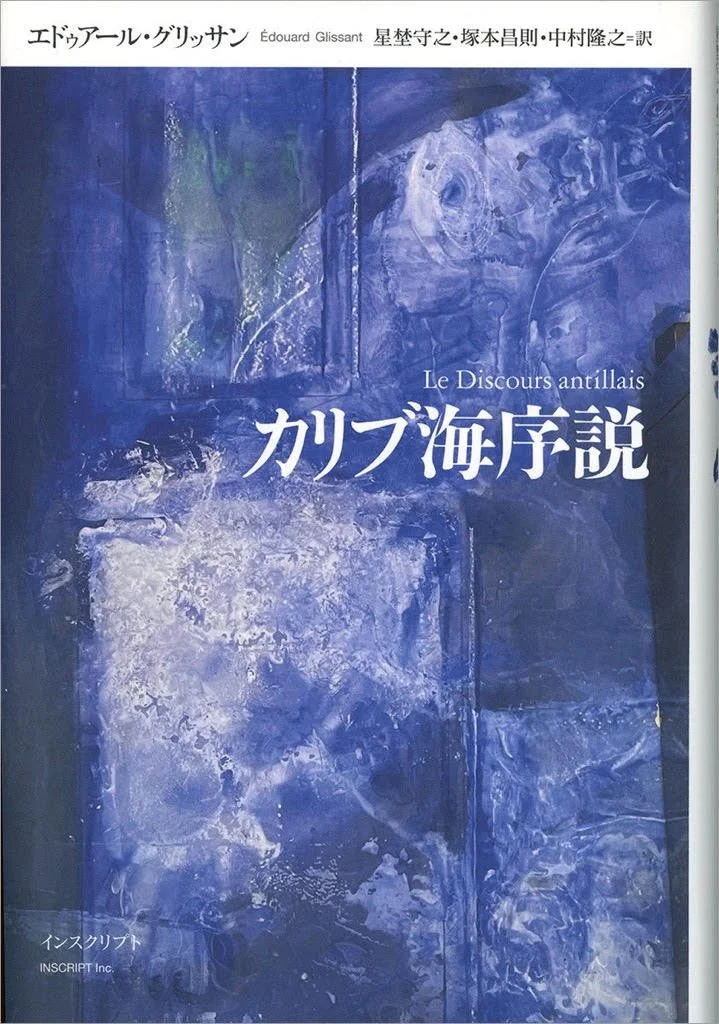
[Nakamura Takayuki (co-translated), Le Discourse antíllais Book Cover, 2024]
No philosophy department in the United Kingdom will invest more than one position for a study of Africana philosophy. In such an academic system, most do not even understand the complex contour of Caribbean philosophy beyond that of négritude. We might have one political theorist reading Fanon or Du Bois at the department of political science, but it is very unlikely that they would be reading Glissant (and there is no space for Raphaël Confiant, Jean Bernabé, Suzanne Césaire, Patrick Chamoiseau, or Sylvia Wynter). Moreover, there are only a few departments that will ever think about hiring more than one world philosophies specialist regardless of the fact that the world is much wider than Europe. Most western-style programs in English literature cannot possibly pluralize themselves into “Literatures in English” as the University of West Indies has done since 1994. They usually consist of people specializing in white British or American literatures.
Moreover, there is no coordination between French, English, Spanish, and Dutch departments to think about covering Caribbean literature in toto, since that is not how the vertical structure of colonial thinking functions. When the creative merging of different languages is not a possibility in the Anglophone scholarship (as it is the case in the post-Brexit UK academia), it is not possible for us to welcome and study non-western thought. So, I must ask my colleagues working in area of Caribbean thought and literature (as I often do to those in Asian philosophies): Why do we keep trying to talk to the audience that is not interested in what we have to say? Are our audience willing to learn from what has happened and been happening in the context of the Caribbean (or Asian) thought?
I think that another way to approach this problem can be fruitful. This requires us to start paying attention to the ways in which Africana as well as Caribbean literatures and philosophies are received and appreciated outside the bounds of European languages. It is true that questions of racism, colonization, antillais, and créolité are most urgently felt within the frustrating chronology formed between the imperial center and the periphery.
When approaching the works of the Caribbean thinkers, speaking European languages seems to be an accessible way of feeling the complicated relation between the language of masters and the legacy of poetic explorations by colonized and racialized people. Or to quote the words of John Agard in “Listen Mr Oxford Don,” we can engage in “slashing suffix in self-defence, … bashing future wit present tense, [and] making de Queen’s English accessory to [our] offense” (100). However, it is also true that Caribbean literatures and philosophies, which come out of the “painful space of diglossia,” can be more clearly observed outside the sphere of the Anglo-European academy. [2]
What I am proposing here may be hard to swallow for most academics, including myself. It is even one step beyond what Ngũgĩ wa Thiong’o had wisely proposed. In Decolonising the Mind: The Politics of Language in African Literature, he argues that “the domination of a people’s language by the languages of the colonizing nations was crucial to the domination of the mental universe of the colonized” (16). Specifically, he notes that it was through “Afro-European literature” (written by Africans in European languages), among other things, that dependence is formed between the colonizer and the colonized. So, it was time for Ngũgĩ in the late 1970s to move away from European languages and to attempt to express himself through his own African language, “of which,” he says, “I had no previous experience” (71).
Not only must we move away from European languages, but we must also start examining how other world languages appreciate Caribbean and Asian thought. We should pay attention to how the world receives the Caribbean expression beyond the Eurocentric model of philosophy and literature.
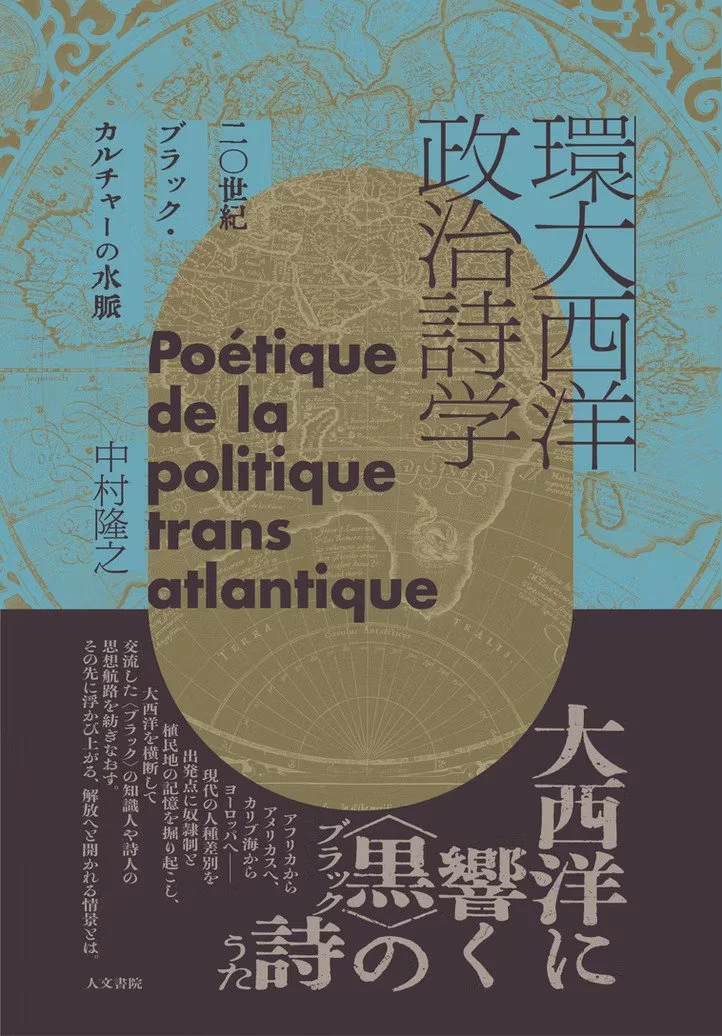
[Nakamura Takayuki, Poétique de la politique trans atlantique Book Cover, 2022]
The value of Caribbean philosophies and literatures in the larger context of world philosophies is no longer in dispute. However, western academia is nowhere near accepting this historical truth by restructuring its model of knowledge production. As such, it is much better for us to collaborate more with scholars from outside the direct line of the conflict of interests between Caribbean writers and the Anglo-European academic establishment. In this way, with much less fear and less pressure from the European gaze, we can examine how Caribbean writers are appreciated in said areas of world philosophies and how they could inspire new hybrid (and Caribbean) thought through comparative studies of non-western literatures and philosophies.
A notable example of this can be found in the dialogue between Chamoiseau and Ōe Kenzaburō (1935–2023) which took place in front of nearly 500 people at the Kinokuniya Southern Theatre in Tokyo in November 2012. The leading scholar of Francophone Caribbean literature and philosophy in Japan, Nakamura Takayuki, reports that their dialogue was built on their trust as “brothers in literature.” [3] Chamoiseau himself referred to a profound resonance between Biblique des derniers gestes (2002) and Hiroshima Notes (1965), while Ōe described his latest work—often reflecting on the connection between his complex relationship (kyōsei, 共生) with his son, Hikari, and the atomic bombings of Hiroshima and Nagasaki—as his “last gestures.” [4]
Of course, Japanese academic scholarship on Caribbean literatures and philosophies does not always look different from the leading works in European academia. Asian scholars also publish their articles in European languages. But what is most interesting about their investigations is that because their historical context and language come with different sets of literary and philosophical traditions, delving into Caribbean symbols and concepts require them to reflect on their social and historical challenges. [5] Underneath their obvious differences, they uncover profound similarities, which bring them to a very close kinship with Caribbean thinkers.
Thus, from outside the Dusselian bondage of the center-and-periphery, we witness the most positive effect of Caribbean thinking in Asia. Instead of waiting for European academia to embrace the philosophical significance of non-western philosophies, it is much more fruitful for us to explore the possibility of constructive and creative conversations among different intellectual traditions beyond the limits of Anglo-European thought.
Notes
This blog post is Part I of a multi-series engagement on the linkages between Japanese and Caribbean thought. To read more, please see Part II (“On Japanese Reception of Francophone Caribbean Thought”).
[1] See Frantz Fanon. Black Skin, White Masks. Trans. Richard Philcox. London: Penguin Books, 2021: 2.
[2] See Jacques Coursil. “L’éloge de la muette.” Reveue des linguists de l’Université Paris Ouest Naterre La Défense 10 (1998): 149–166. I drew this quotation from Nakamura Takayuki. A Theory of the Caribbean–World: Places and Histories of Anti-Colonial Resistance. Kyoto: Jimbunshoin, 2013: 368.
[3] Chamaoiseau is known to have called Ōe his “brother in literature.” See Nakamura. Ibid, 392.
[4] Hikari means “light.” Importantly, he was born with intellectual disability, which made Õe visit Hiroshima in the 1960s (where many children had been born with a wide range of disabilities long after the end of World War II). Nuclear holocaust survivors in Japan famously used the phrase, “pikadon,” to describe their experience. It is an onomatopoeia for both the flash and sound of nuclear bombs. The light, in this sense, for Ōe can refer to both hope and devastating destruction that can last for generations beyond our comprehension. See Nakamura. Ibid, 393.
[5] For more Japanese scholarships on Caribbean thought, see the works of Nakamura Tohru. I am the Archipelago: An Introduction to Caribbean Thought. Fukuoka: Shoshi Kankanbou, 2023 and Where Are Your Monuments?: The Caribbean Poetics of Memory. Tokyo: Kashiwa Shobo, 2025.
References
Agard, John. “Listen Mr Oxford Don.” Index on Censorship 35:2 (2006): 100-101.
Curry, Tommy. “On Derelict and Method: The Methodological Crisis of African-American Philosophy’s Study of African-Descended Peoples under an Integrationist Milieu.” Radical Philosophy Review 14:2 (2011): 139-164.
Thiong’o, Ngũgĩ wa. Decolonising the Mind: The Politics of Language in African Literature. Nairobi: James Curry, 1986.
Cover Photo Credit: Nakamura Takayuki, “Untitled,” 2021.

Takeshi Morisato is a Lecturer in non-Western philosophy at the University of Edinburgh where he teaches Japanese philosophy, Buddhist philosophy and Africana philosophy. He is currently serving as the editor of the European Journal of Japanese Philosophy and of the book series, “Thinking World Philosophies" (Edinburgh University Press) among others. He generally publishes books on Japanese philosophy in English and Africana Philosophy in Japanese but there has been some crossover in the area of Afro-Asian philosophy.