Notes on Casta Paintings in the Longue Durée of anti-Blackness

By Rosa O’Connor Acevedo
“De Español y Negra, sale Mulato” is the title for one of the sixteen casta paintings from the Mexican painter José Joaquín Magón, brought to Spain from Mexico between 1766 to 1772. The painting depicts the union of a Spanish man and Black woman as well as their offspring, a mulatto child, that also denotes a unique racial configuration or casta.
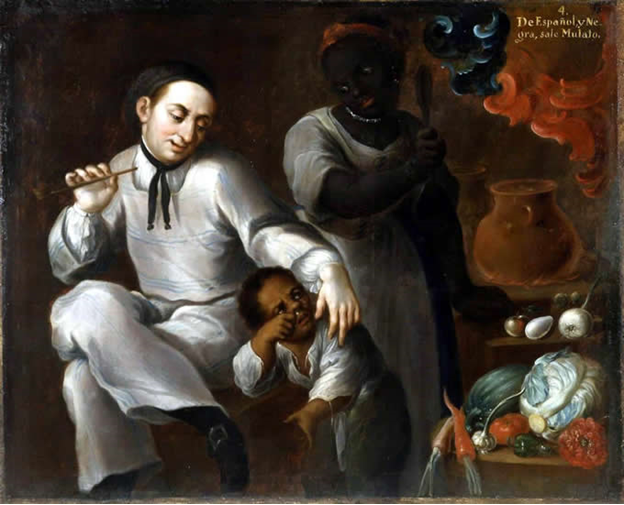
[Fig. 1: José Joaquín Magón, “De Español y Negra, sale Mulato,” c. 1770]
The strong contrast of colors within the painting prevents discerning the Black woman’s face and expression(s). At the same time, Joaquín Magón deliberately depicts the Black woman as an aggressive figure emphasized by her handling of a kitchen spoon and the protective gesture of the Spanish man holding the sobbing child away from his mother. The anti-Black message here is not neutral to “gender.” Black women were often represented by casta painters, as Susan Kellogg argues in “Depicting Mestizaje,” as disrupting social and family patterns, putting into question their “motherhood” (76). Magón’s painting is not exceptional within eighteenth century Latin American and the Caribbean visual culture but is rather part of anti-Black gender social ontology underlying the colonial racial casta system. [1]
Pinturas de castas was a genre of art representing castas or mixed-race groups in New Spain around the eighteenth century, though other places like New Granada and Brazil had similar aesthetic portrayals. The sistema de castas (casta system) in colonial Latin America was a hierarchical system of social classification that legitimized the hierarchy of Spanish descended people and Spanish rule. [2] Each casta was classified according to their lineage, i.e., their proportion of Indigenous, Spanish, and African ancestry. Casta paintings fulfilled a pedagogic function by publicly teaching not only the expected behavior, social status, moral quality, and occupation for each group, but also the gender expectations of casta women.
As Daphne Taylor-García illustrates in The Existence of the Mixed Race Damnés, the more castas (especially those with Indigenous and African descent) mixed among each other, the more degraded and animalized their offspring were considered. Importantly, casta etymology reveals an underlying zoological logic associated with African ancestry. In Fig. 1, the child of the Spanish man and Black woman is labelled mulato, a term derived from the Spanish term mula (mule); a hybrid animal historically associated with arduous labor. [3] In contrast, the daughter of the mestiza woman and Spanish man is named “castiza”, a term that signifies someone of good origin and nobility. Magón’s painting of the castiza child is consistent with the early romanticized representations of mestiza and Spanish unions by the late eighteenth century. Kellogg acutely connects the representation of “idealized and domesticated interracial relationships” between mestiza women and Spanish men as a basis for the emergence of proto-national identities in Mexico (74-75).
We can see in Fig. 2 how Magón portrays the union among a mestiza woman and a Spanish man as one that brings harmony, insofar as these lineages meet together to lean in a European direction. Nothing is accidental in casta paintings. Magón plays with the symbolism of objects, gestures, and bodily movement to convey a meaning about the class, gender, and racial hierarchy within the casta system. For instance, in Fig. 2, both the mestiza woman and her child lean towards the Spanish man, looking at a small bird held by him. This is not a menacing bird, such as that illustrated in other casta paintings like Miguel Cabrera’s “De Español y Albina, Torna atrás,” but a gentle and tranquil bird that might convey order and beauty. In Cabrera’s painting (Fig. 3), the Spanish man’s confused gaze at the sizable parrot heralds the unsettling nature of this family’s composition. While his wife, an Albina woman, looks and performs Spanish whiteness, their daughter's skin says otherwise. [4] The daughter’s darker complexion confirms the racial anxieties of what is known today as requintamiento or the re-appearance of Black features in the fifth or later generations from presumably non-black parents.
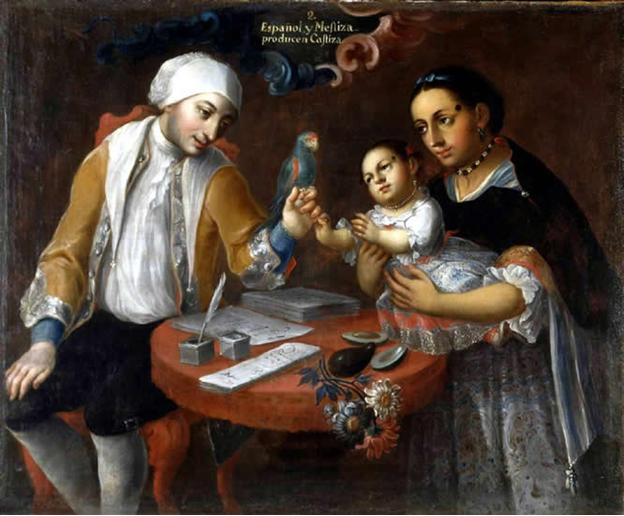
[Fig. 2: José Joaquín Magón. “Español y Mestiza producen Castiza,” c. 1770]
By the time of the casta painting, Albino people were subjected to contested theories that included fascination and abjection, with many categorizing the group as a monstrous race. In “White or Black? Albinism and Spotted Blacks in the Eighteenth-Century Atlantic World,” Ilona Katzew documents in detail the wide array of Ancient and Medieval theories adopted by European and criollo ecclesiastical and civil intellectuals to explain Albinism and vitiligo. Far from a homogeneous understanding, people with albinism or spotted pigmentation on Black bodies were often considered to be a separate race, at times heavily associated with the curse of Ham. [5] “Neither black nor white,” Katzew explains, “they occupied a liminal space in racial classificatory systems, rendering them part human and part monstrous” (156). Within the context of eighteenth century casta paintings, Albino casta was portrayed as the offspring of a Spanish man and a Morisca woman, who herself was the result of a Spanish and mulatto union. Thus, the presence of a Morisca mother already signified African ancestry with this group. It is not an accident that the offspring of the Albina woman and Spanish man is labeled as a torna-atrás (return-backwards) since it represents the visible regression of the casta to a dark-skinned body.
Importantly, objects from casta painting express different social classes and occupations. In the first painting, the Black woman holds a spoon which accentuates her labor preparing food in a big ceramic pot. The variety of vegetables on the right side of the painting reinforces the association of Black women with nature, poverty, and domestic labor. The high smoke going up at the top right corner of the painting also symbolizes a level of chaos and disregard for the Black woman in her domestic occupation.
In the case of the second painting, the presence of vegetables is minimal and reduced to two avocados on the right side and some dead flowers below. While these minimal references to nature might still remind the viewer of the mestiza’s Indigenous ancestry—often associated with food preparation and food vendors— her cloths and that of her child symbolizes social upward mobility in comparison with other castas. An initial message of elevated social status is also expressed through the clothes and jewelry worn by the Albina woman and her daughter in Fig. 3. Both the Albina and her daughter wear a dress with refined fabric and embroidery, pearl jewelry, and an embroidered headband visually contradicting the mother’s disguised African ancestry. Selecting an Albina woman to represent the Albino casta is not accidental since it reinforces the association of impurity with the mother’s (African) lineage, a semiotic trope that goes back to the association of conversas women bodies with stained lineage or blood impurity in early modern Iberia.
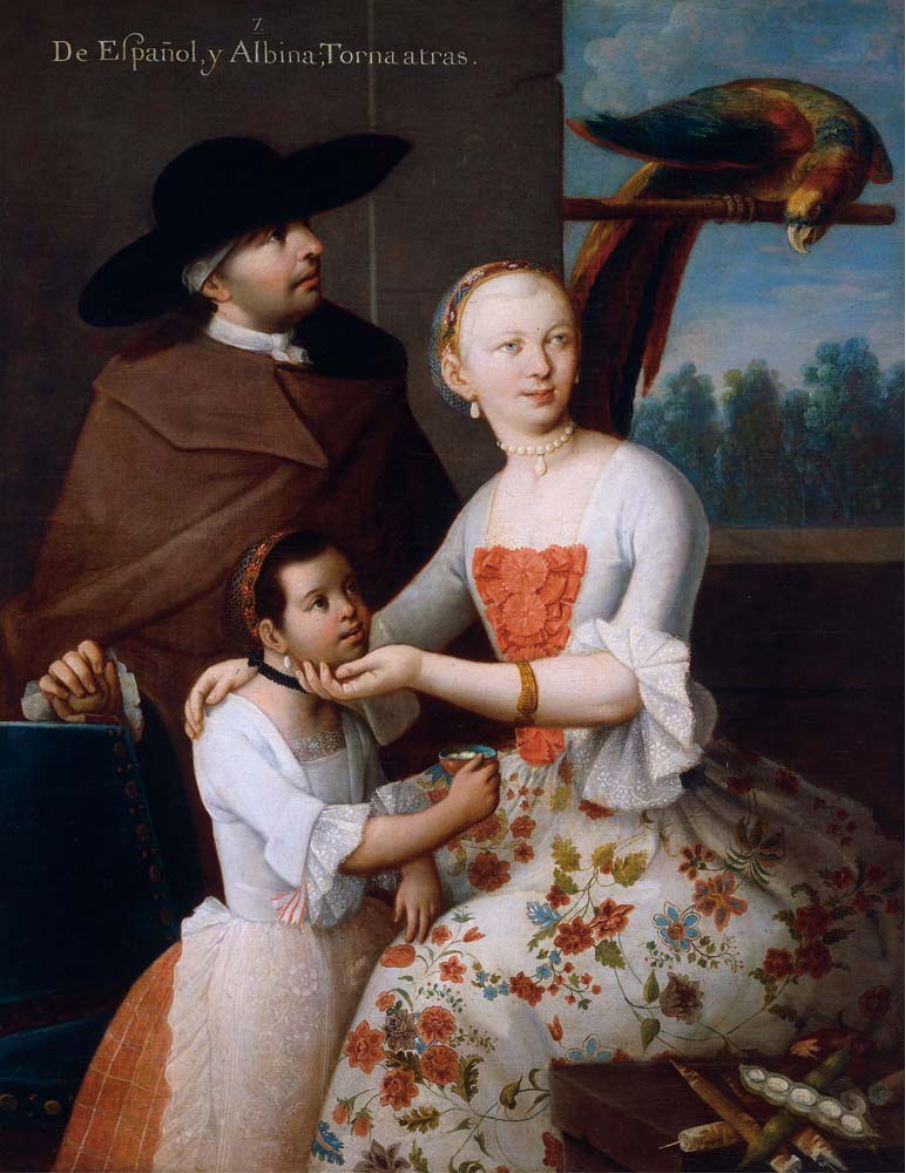
[Fig. 3: Miguel Cabrera, “De Español y Albina, Torna Atrás,” c. 1763]
By the eighteenth century, mancha or stained lineage was strongly associated with people of African ancestry in the Spanish colonies. African-descended women were seen as a threat to the purity of Spanish-descended families, particularly for those of a higher social class. Demonstrating that a person came from a clean lineage, without Jewish, Muslim, or African ancestry, was a requirement to access institutions and occupations—such as the Church, government, and universities. [6] Not surprisingly, Latin American elite classes bear the legacy of limpieza de sangre even today with an overrepresentation of white or white-mestizo families in the highest socioeconomic and political classes.
As brilliantly shown by María E. Martínez in Genealogical Fictions, blood purity simultaneously developed in the Iberian Peninsula and the Spanish colonies. Originating in the mid-fifteenth century, “Old Christians” claimed a clean lineage in contrast to what they considered a stained lineage, embodied by Jewish or Muslim ancestry in New Christians or converts (conversos and moriscos). Social dynamics in New Spain intensified the institutional mechanisms that distinguished between those of pure and stained lineage. Indeed, Martínez asserts, “the proliferation of the limpieza statutes was also related to Spanish colonialism, which in addition to producing rapid demographic and socioeconomic shifts in Iberia, transformed the issue of purity of blood into a transatlantic preoccupation” (46).
The institutionalization and racialization of blood purity in colonial Latin America illustrates what Anya Topolski and Josias Tembo describe as an interactive transatlantic race-religion constellation. [7] Rather than seeking a signature date for the origins of race that privileges one region or period, Topolski and Tembo invites us to see the complex ways in which race and religion interacted mutually in-between the geographies of Africa, Europe, and the Américas. The disaggregated anti-Black and gendered logic of the casta system was built and expanded upon discourses and practices about Muslim, Jewish, and African bodies in the Iberian Peninsula and African continent prior to their consolidation in colonial Latin America.
The representation of Black women as engendering unstable families was not only shaped by the notion of blood impurity but was also structured through the web of discourses and representations about African female bodies in travel narratives in the African continent, which were far from homogeneous. Historian Jennifer Morgan in Reckoning with Slavery scrutinized masterfully how the destruction of African kinship relations grounded the emergence of hereditary racialized slavery. To normalize the fetishization of black African bodies and the plunder of resources, early modern European narrators replicated the trope of parental indifference. “The accusation that African women and men were indifferent parents” explains Morgan, “became crucial; it marked Africans as vectors of kinlessness, as the accusation of parental disregard became part of the claim that African women produced children only for the marketplace” (126). These narratives, written as early as the mid-fifteenth century, contributed to an anti-Black gendered social imaginary that was expanded with the racialized gender dynamics in the Spanish colonies.
The experience of Black women today, or what Marta I. Cruz-Janzen calls Latinegras in “Latinegras: Undesirable Mothers, Daughters, Sisters, and Wives,” are marked by the politics of anti-Blackness, whiteness, and mestizaje that originated with the casta system and the African Slave Trade. Latinegras are “Latinas of obvious black ancestry and undeniable ties to Africa” who are “marked by a cruel, racialized history because of the shades of their skin” (168). Throughout what Lélia Gonzalez calls Améfrica (resistant indigenous and Afrodiasporic hemispheric social formation), African descended women of darker complexions experience multiple layers of anti-Black gendered insults, aggressions, and devaluations since early childhood. [8]
Furthermore, the bodies of Latinegras are experienced as contradictory sites of hypersexual desire and social abjection under the myth of mestizaje. That is, its reliance on a whitening project that seeks to “mejorar la raza” (improve the race), ultimately rendering Black women as undesirable wives and mothers. [9] The denial of kinship relations and motherhood to Black women is not detached from the vulnerabilities to gratuitous sexual violence and femicide that women of color experience today in the Western Hemisphere. [10] In this light, the casta painting serves as a visual representation, not only of the longue durée of anti-Black gendered ontologies but its ongoing resistance by Black and African descended women.
Notes
[1] Certainly, the question about gender is more complicated since enslaved and African descent females were not seen as women in the way that white females were seen as the model for womanhood. There are, though, unique mechanisms of objectification and exploitation for Black woman. For the sake of simplicity, I will be using the terms woman and gender, but this is a far more complex issue. See Hortense J. Spillers. “Mama’s Baby, Papa’s Maybe: An American Grammar Book.” Diacritics 17:2 (1987): 64-81; Celenis Rodríguez Moreno. “The Woman and Her Obscure Versions.” Hypatia 37:3 (2022): 566-581; and Selamawit Terrefe. “The Pornotrope of Decolonial Feminisms.” Critical Philosophy of Race 8:1-2 (2020): 134–164.
[2] Here it is important not to confuse the term casta from the use of the term caste in the Indian context. In the Spanish colonies, the term casta was used as part of an ensemble of cultural, social, economic, and naturalistic understanding of groups with mixed ancestry. Furthermore, in the colonies, casta acquired more racialized meanings as it expanded notions of blood purity and impurity.
[3] For more on the meanings of mules within the Medieval period, see Steven A. Epstein. “The Invention of Mules.” The Medieval Discovery of Nature. New York: Cambridge University Press, 2012: 40-77.
[4] For a brief explanation about the representation of Albina woman in casta paintings, see Ilona Katzew. “Why an Albino? Some Notes On Our New Casta Painting by Miguel Cabrera.” Unframed. April 22, 2015.
[5] Christianity is an important theological source for a longer history of negative meanings attached to black Africans through biblical interpretations and use of color symbolism which includes the association of black skin with sin and evil since the early Middle Ages. While not all representations of black Africans were negative under Medieval Christianity, the degrading interpretations that endured after this period had real consequences. The curse of Ham is one example of biblical interpretations, in this case of Genesis 9:18-29, where Noah curses his son Ham and his descendants to perpetual slavery after exposing his father’s nakedness. The interpretation that associated Ham’s descendants with the African continent was prevalent during the Medieval period and was adopted by influential early modern figures like Gomes de Zurara (1410-1474), the chronicler of Prince Henry de Navigator’s expeditions in the West African coast. While it was originally interpreted as an explanation for the origin of black skin, it later was used to justify the enslavement of black Africans. For an analysis of the connection between the curse of Ham and the association between blackness and slavery, see David M. Goldenberg. Black and Slave: The Origins and History of the Curse of Ham. Berlin: Walter de Gruyter, 2017.
[6] Under limpieza de sangre, both purity and distance (from blackness) are critical as the latter is seen to be degrading. For an analysis of blood purity in nineteenth century Puerto Rico, see María del Carmen Baerga, Negociaciones de sangre: dinámicas racializante en el Puerto Rico decimonónico. Madrid: Iberoamericana & Vervuert & Ediciones Callejón & Universidad de Puerto Rico, 2015.
[7] See Josias Tembo. “Race-religion constellation: An argument for a Trans-Atlantic Interactive-Relational Approach.” Critical Research on Religion 10:2 (2022): 137-152; Josias Tembo and Anya Topolski. “Exploring the Entanglement of Race and Religion in Africa.” Social Dynamics 48:3 (2022): 377-388; and Anya Topolski. “The Race-Religion Constellation: A European Contribution to the Critical Philosophy of Race.” Critical Philosophy of Race 6:1 (2018): 58-81.
[8] For the notion of Améfrica, see Lélia Gonzalez. “La categoría político-cultural de amefricanidade.” Tempo Brasileiro 92:93 (1988): 69-82. For an account of Brazilian Black Feminism, see Lélia Gonzalez. Por um Feminismo Afro-Latino-Americano. Rio de Janeiro: Editora Schwarcz, 2020 and Beatriz Nascimento. The Dialectics Is in the Sea: The Black Radical Thought of Beatriz Nascimento, Princeton, NJ: Princeton University Press, 2023.
[9] Many Latin American and Caribbean scholars of race have detailed the anti-Black and pro-white logic behind national discourses on mestizaje. See Mara Viveros Vigoya. “Blanqueamiento social, nación y moralidad en América Latina.” Enlaçando sexualidades (2016): 17-39; Isar P. Godreau et al. “The Lessons of Slavery: Discourses of Slavery, Mestizaje, and Blanqueamiento in an Elementary School in Puerto Rico.” AmericanEthnologist 35:1 (2016): 115-135; Mónica Figueroa Moreno. “Distributed intensities: Whiteness, mestizaje and the logics of Mexican racism.” Ethnicities 10:3 (2010): 387-401; Sergio Gallegos Ordica. “Epistemic Injustice and the Struggle for Recognition of Afro-Mexicans: A Model for Native Americans?” APA Newsletter: Native American and Indigenous Philosophy 18:1 (2018): 35-42;and Miguel Gualdrón Ramírez. “Two Versions of the Mestizo Model: Towards a Theory of Anti-Blackness in Latin American Thought.” The Journal of Speculative Philosophy 37:3 (2023): 319-332.
[10] See Andrea J. Ritchie. Invisible No More: Police Violence Against Black Women and Women of Color. Boston: Beacon Press, 2017.
References
Cruz-Janzen, Marta I. “Latinegras: Undesirable Mothers, Daughters, Sisters, and Wives.” Frontiers: A Journal of Women Studies 223 (2001): 168-183.
Katzew, Ilona. “White or Black? Albinism and Spotted Blacks in the Eighteenth-Century Atlantic World.” In Envisioning Others: Race, Color, and the Visual in Iberia and Latin America. Ed. Pamela Patton. Leiden: Brill, 2016.
Kellogg, Susan. "Depicting Mestizaje: Gendered Images of Ethnorace in Colonial Mexican Texts." Journal of Women's History 12:3 (2000): 69-92.
Martínez, María Elena. Genealogical Fictions: Limpieza de Sangre, Religion, and Gender in Colonial Mexico. Stanford, CA: Stanford University Press, 2008.
Morgan, Jennifer L. Reckoning with Slavery: Gender, Kinship, and Capitalism in the Early Black Atlantic. Durham, NC: Duke University Press, 2021.
Taylor-Garcia, Daphne V. The Existence of the Mixed Race Damnés: Decolonialism, Class, Gender, Race. Lanham: Rowman & Littlefield, 2020.
Cover Photo Credit: Anónimo, “Pintura de castas,” c. 1750.

Dr. Rosa O’Connor Acevedo is an Assistant Professor in the philosophy department at Michigan State University (MSU). She received a Ph.D. in philosophy from the University of Oregon and a M.A. in philosophy from the University of Puerto Rico (Río Piedras). Her book project, The Long Durée of anti-Blackness: A Fractured Ontology, explores the religious, economic, and political practices and notions that shaped the historical development of anti-Blackness, from early modern Iberia to the Spanish Caribbean. Her interdisciplinary research adapts methods and concepts from broad literature, ranging from racial capitalist analysis, critical philosophy of race, feminist philosophy, and Caribbean philosophy.